
BLOG post #3 in the Back-to-School Series by Stephanie Lloyd
We’re back for part 3 of this “Back to School” blog series, and this one has options for college and university classrooms. In this post, we’re exploring ways professors can use photovoice to help students connect course concepts to the world around them, deepen reflection and discussion, and showcase what they are learning. At the collegiate level, photovoice opens even more possibilities, since students can take greater ownership of the process, and tie the method to their specific discipline or research interest. And once again, you don’t need to devote an entire semester to a photovoice project to get started, because there are plenty of ways to borrow pieces of the process and incorporate them into a single lesson, unit, or course assignment.
If you are tuning in now, here is part 1: photovoice with elementary students: LINK and part 2: photovoice with middle and high school students: LINK
Turning Students into Researchers.
Photovoice can become even more student-led at the college level, where it can be built directly into the course syllabus, learning objectives, or research assignments. It offers an opportunity to move beyond simply learning about a topic to actively exploring how it shows up in everyday life.
For example, Sociology students might document how inequality or social norms appear in everyday spaces; public health students could explore campus conditions that support or hinder well-being; education students might photograph examples of inclusion and accessibility; environmental studies courses could investigate sustainability on and around campus; and first-year seminars could ask students to document where they find community.
Photovoice can also strengthen service-learning, study abroad, community-based research, and capstone courses. With more advanced students, professors might hand over responsibility for developing research questions, facilitating photo discussions, analyzing findings, and deciding how to share results with others.
For example…
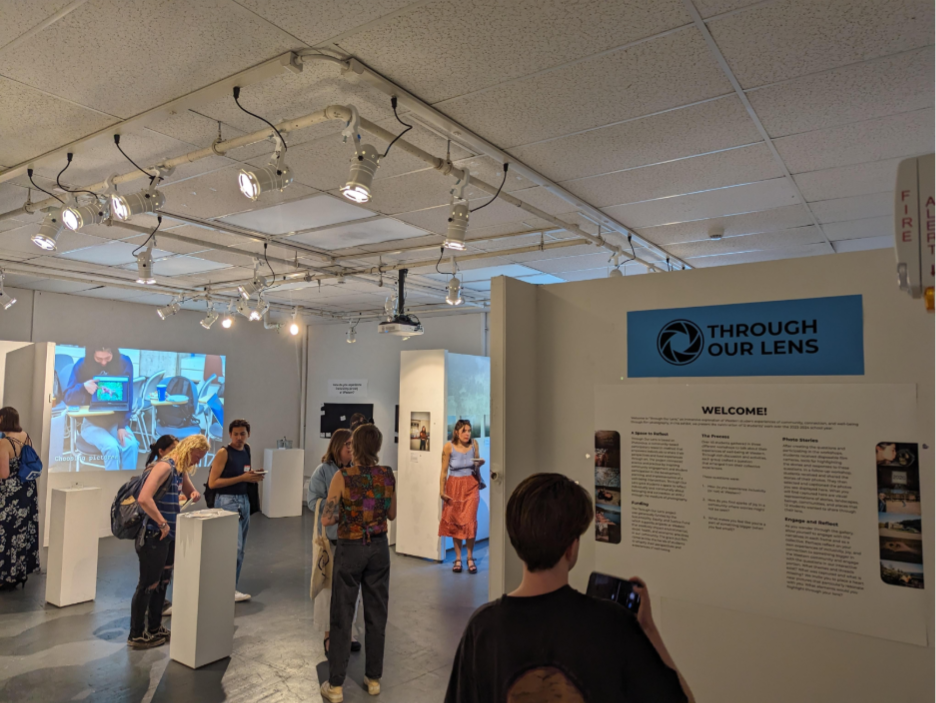
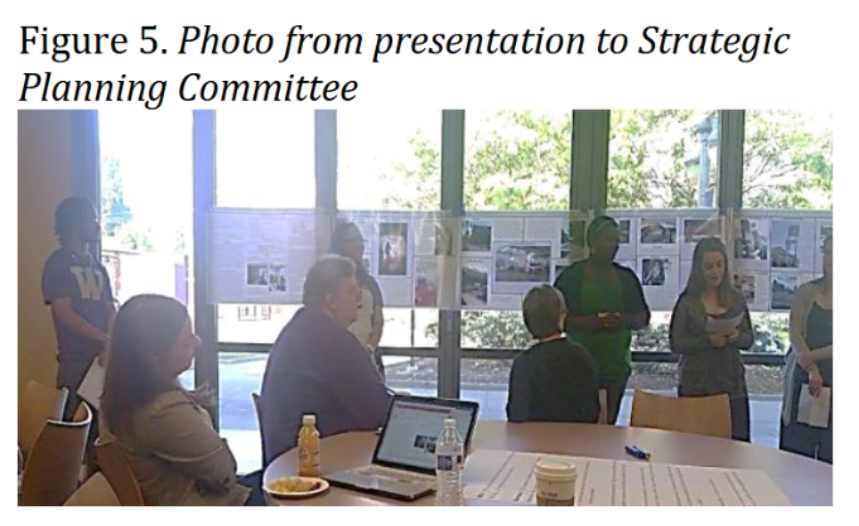
- A full-quarter project: Hershberg et al. (2019), described a student-led photovoice project embedded in a 12-week undergraduate community psychology course. Students investigated their own campus experiences, collectively analyzed photographs, and identified themes related to isolation, limited community spaces, and parking challenges. They presented their findings at a university research symposium, creating opportunities for dialogue about campus improvements. The project doubled as a way to learn community psychology, qualitative research, and participatory practice.
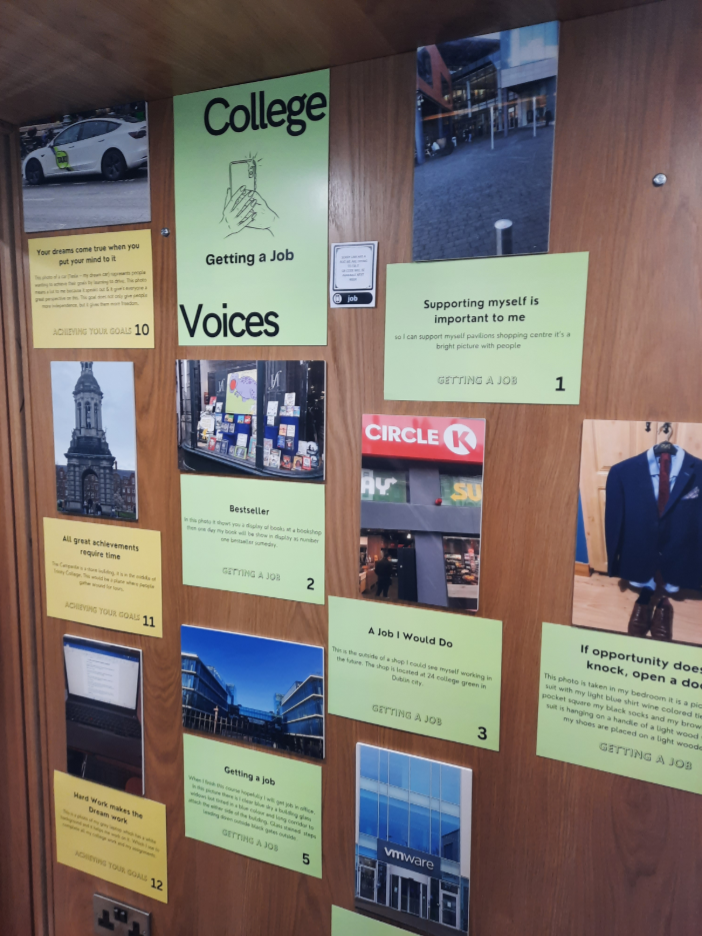
- A three-part process: Andina-Díaz et al. (2024) asked nursing students to explore how vulnerable populations experienced the COVID-19 pandemic. Students first learned about the topic and the photovoice method, then photographed their communities and completed SHOWeD reflections. Finally, they discussed their images and created a photo exhibition. The activity encouraged students to think critically about health inequities and connect classroom learning to real-world experiences.
- A single-class or one-week application: González-Granados et al. (2025) explored using photovoice to help university students make abstract social science concepts visible. In one activity, students selected or photographed examples illustrating theories such as functionalism, social constructivism, labeling theory, and social conflict. They then explained how their images connected to the concepts and shared their interpretations with classmates. Their findings suggest that asking students to generate visual examples themselves can push them to make deeper connections between theoretical concepts and everyday life.
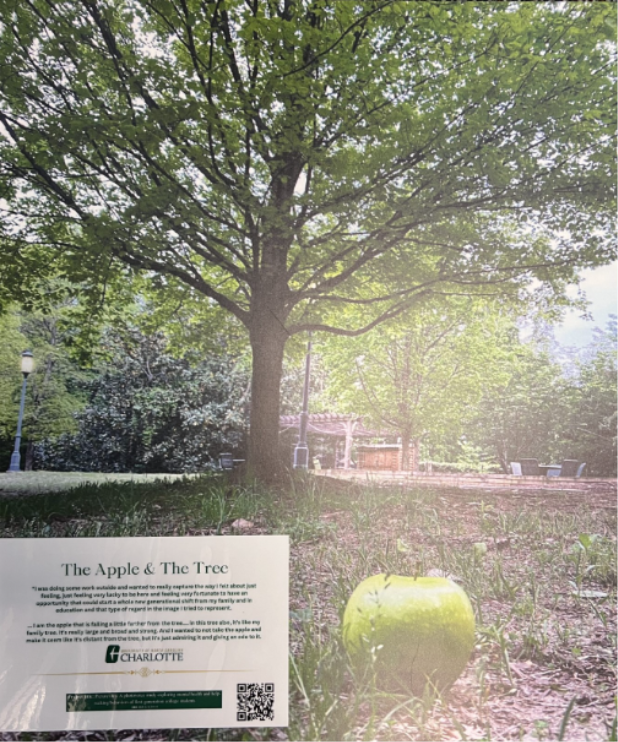
From: A Picture of [Perfect] Mental Health: Using Photovoice to Examine the Challenges and Opportunities for Success among First-Generation College Students
–> IDEAS: Here are a few ideas that can be adapted across disciplines, class sizes, and course formats:
- “First 30 Days Through Our Eyes” (First-Year Seminars): Invite first-year students to document moments of connection, confusion, discovery, support, or challenge during their first month on campus. In small groups, students discuss their images and identify common themes about what helps or hinders a successful transition to college. Consider sharing their findings with student affairs staff or orientation teams.
- “Theory in the Real World” (Sociology, Psychology, Education, and Social Sciences): Ask students to select one or two concepts from the course and take photographs illustrating how they appear in everyday life. Students write short captions explaining the connection and share their photos in small groups. What different interpretations emerge? How might the photographs challenge or reinforce what they’ve learned?
- “A Day in the Life” (Social Work, Nursing, or Professional Programs): Ask students to document aspects of their daily routines, field placements, or learning environments that reflect course concepts. For example, nursing students might photograph examples of health promotion in their communities, while education students could document environmental features that support inclusive learning. Use the photographs as prompts for reflection and discussion.
- “Visual Field Notes” (Environmental Studies, Anthropology, or Study Abroad): As part of a field visit or community-based assignment, ask students to photograph something that surprised them, challenged an assumption, or raised a new question. Back in class, students share their photographs and captions, then discuss what they learned and what additional information they would need to better understand the issue.
No Time for a Full Photovoice Project?
Start with a single photograph and a discussion! Ask students to bring an image connected to a course topic and write a short caption explaining its significance. Give them time to share in pairs or small groups and reflect on what they notice across their classmates’ photographs.
For online courses, students can post their photographs and captions to a discussion board and respond to one another’s interpretations. Research by Reyes-Foster and DeNoyelles (2018) illustrates how photovoice-inspired discussions can help students connect their experiences to course material in an asynchronous learning environment.
Remember that the photograph is only one part of photovoice. The conversations, reflections, and collective meaning-making are what turn photographs into opportunities for learning. A single photo-based assignment can introduce students to these skills, while a longer project offers more opportunities for shared analysis, student leadership, and action.
A Note About Ethics and College Student Participation
As with any photovoice project, ethical considerations should be part of the planning process. College students may be more independent photographers and researchers, but that doesn’t eliminate the need for conversations about consent, privacy, safety, and respectful representation.
Before giving a photo assignment, consider where they can take photos, how they will obtain permission, and where the images may be shared? Participation and public sharing should be approached as separate decisions. A student may be comfortable discussing a photograph with classmates but not displaying it in a public exhibit. If the activity involves research beyond the classroom, consult relevant institutional research ethics requirements.
And, of course, give students meaningful choices throughout the process. When possible, let them help shape the questions, choose which photographs to discuss, identify themes, and decide how their findings should be shared. If students uncover important concerns or opportunities for improvement, consider how their perspectives might reach people who can respond.
Photovoice Research for Teachers
Here are a few articles, projects, and resources that can spark some ideas on how to bring photovoice to your own classroom:
- PhotovoiceWorldwide Blogs: Lights, Camera, Activism; Part I: Finding Connection Amidst the Pandemic and Lights, Camera, Activism Part II: Two Student Perspectives
- Monteblanco AD, Moya EM. Photovoice: Integrating Course-Based Research in Undergraduate and Graduate Social Work Education. Br J Soc Work. 2020 Dec 3;51(2):712-732. doi: 10.1093/bjsw/bcaa154. PMID: 33846680;PMCID:PMC8023243. https://pmc.ncbi.nlm.nih.gov/articles/PMC8023243/
- Kolenick, P. (2024). “Chapter 5: Photovoice for transformative learning: an exploration in graduate adult education“. In Promoting Inclusion and Justice in University Teaching. Cheltenham, UK: Edward Elgar Publishing. Retrieved Sep 28, 2026, from https://doi.org/10.4337/9781035323456.00012
What’s Next?
Whether you’re teaching a first-year seminar, graduate research course, or professional training program, photovoice offers a creative way to connect academic learning with students’ experiences and perspectives.
Start small, and then think about where the learning could lead. A photograph that sparks discussion in the classroom might become part of a larger research question, a community conversation, or a recommendation for change.
Interested in planning a photovoice project or activity with college students and don’t know where to start? Register for one of our trainings or email: info@pvww.org to set up a tailored training or project support for you and your team members.