Photovoice Trainings

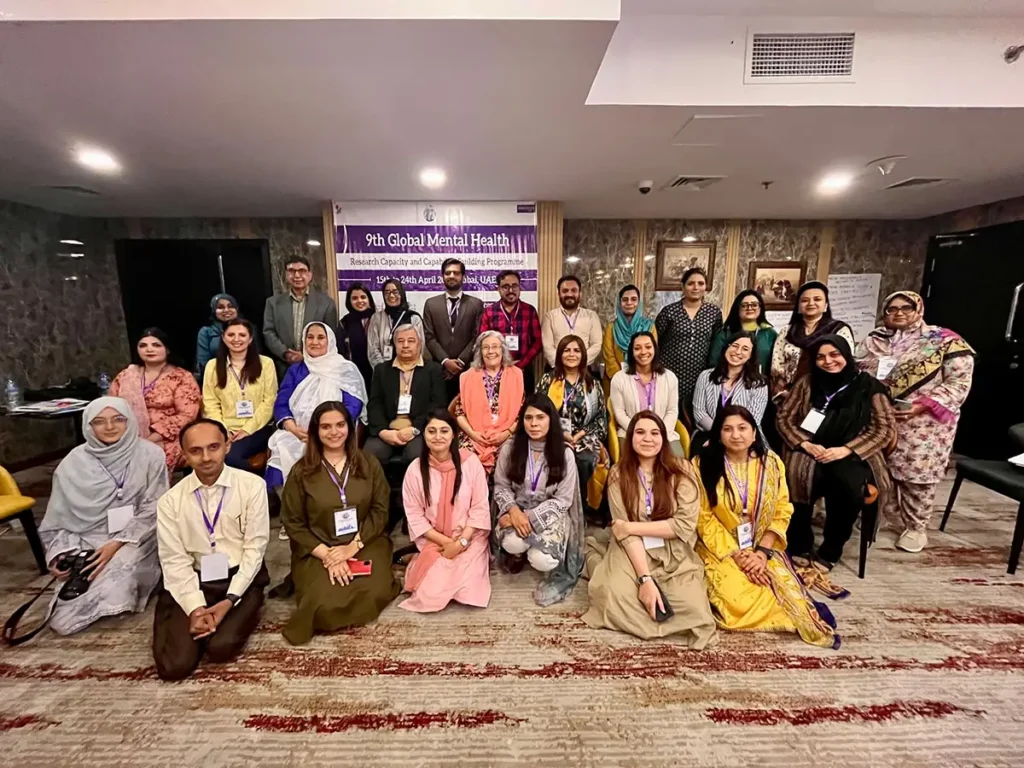
Participants from a photovoice training with Laura Lorenz, Stephanie Lloyd, and Erica Belli at the Global Mental Health Research Capacity and Capability Programme
One of the unique features of the photovoice method is that, unlike traditional qualitative research, it generates opportunities for underrepresented populations, or people who historically have not had a voice, to have a say in the decisions that affect their lives. Though commonly practiced within the health and public health sectors, it currently extends to a variety of populations and contexts.

People getting food through a buffet line. In the corner, a note states "I don't have to eat alone - I get to eat with others"
Human Rights and Democracy lawyer Christian C. Carbonell writes, "My role as a facilitator before and after the PhotovoiceWorldwide training was profoundly different. Both projects were meaningful, but the latter had much more depth, structure, and reflection."
Erica Belli talking with participants during a training
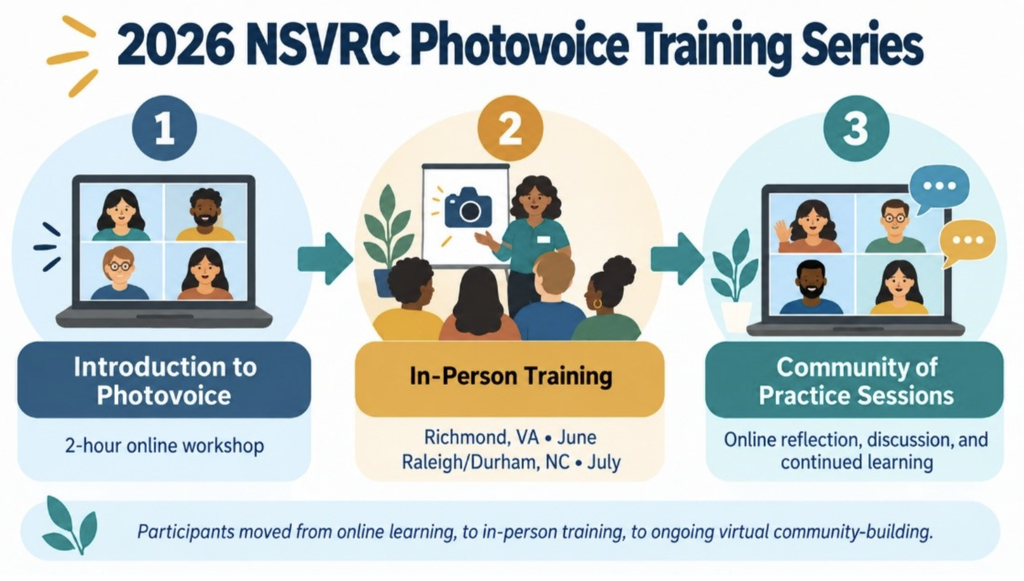
In summer 2025, PVWW instructors hit the road with a series of in-person photovoice trainings. We interviewed one of them about the experience and her takeaways. The results may surprise you!
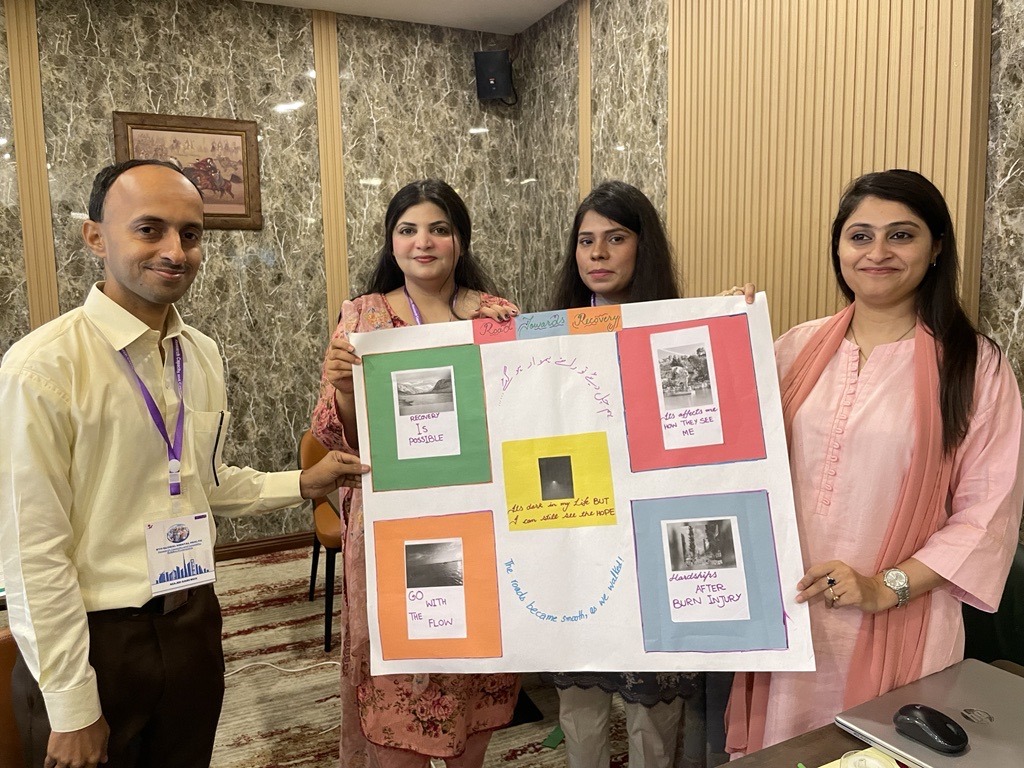
4 participants stand together holding their poster with photos and captions
In April, Photovoice Worldwide educators traveled to Dubai, UAE, to conduct a two-day, intensive, photovoice training. While there, they experienced historic rains and flooding.
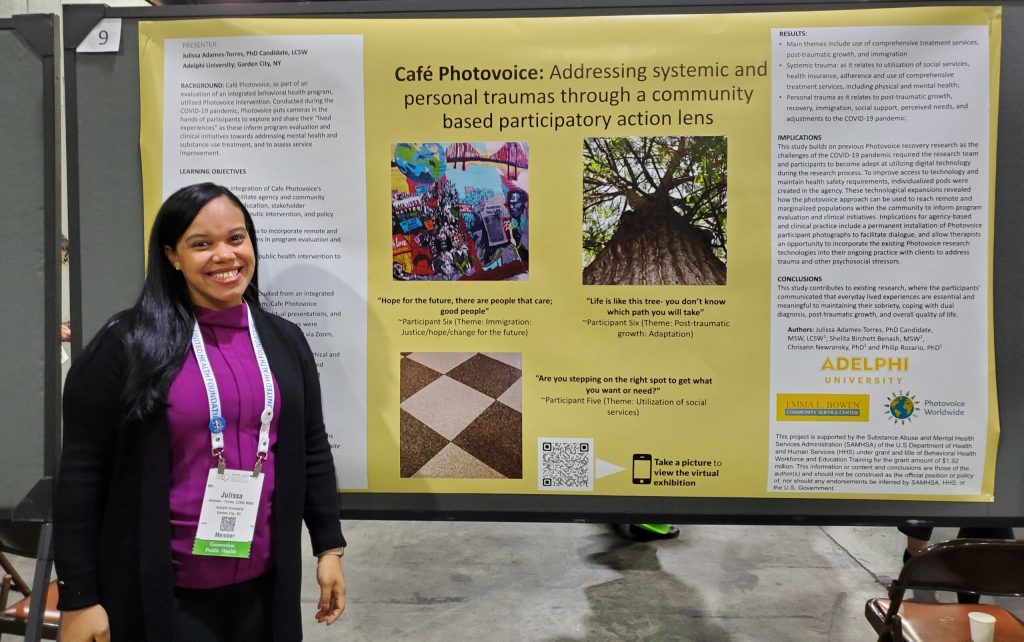
Julissa standing next to her poster from APHA
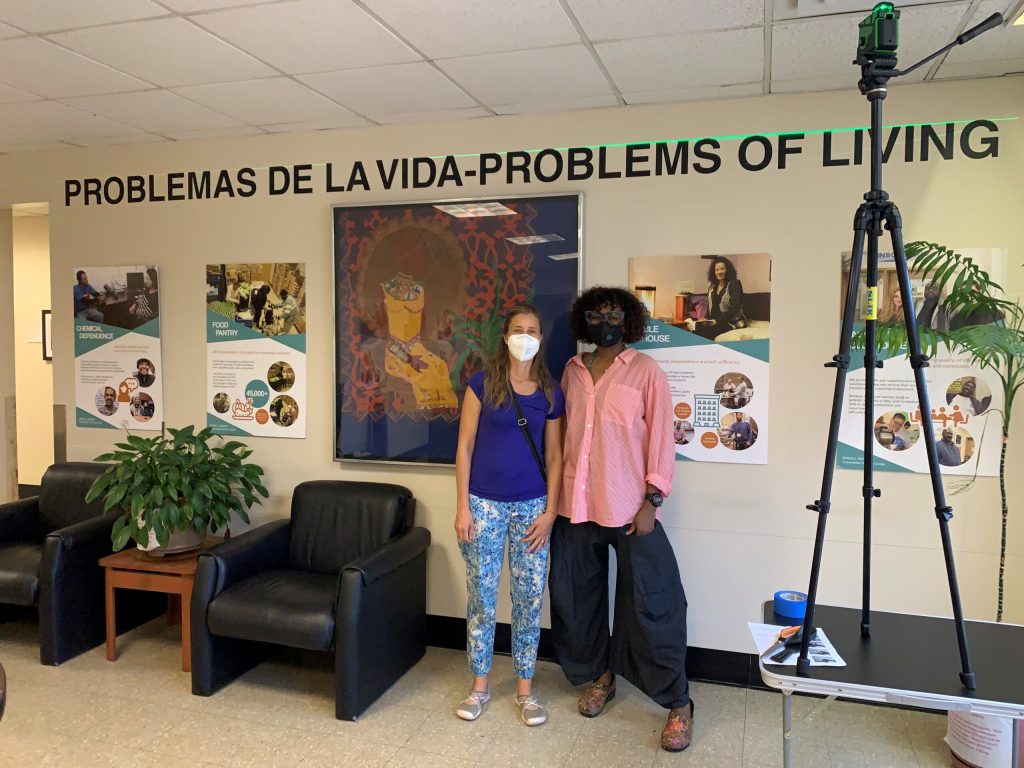
Social worker and PhD candidate Julissa Torres-Adames believes that, “With proper support, photovoice can...help clients work through past traumas and narrative therapy approaches.” PVWW interviewed Julissa about a project she co-facilitated with persons accessing services for mental health and substance use issues.
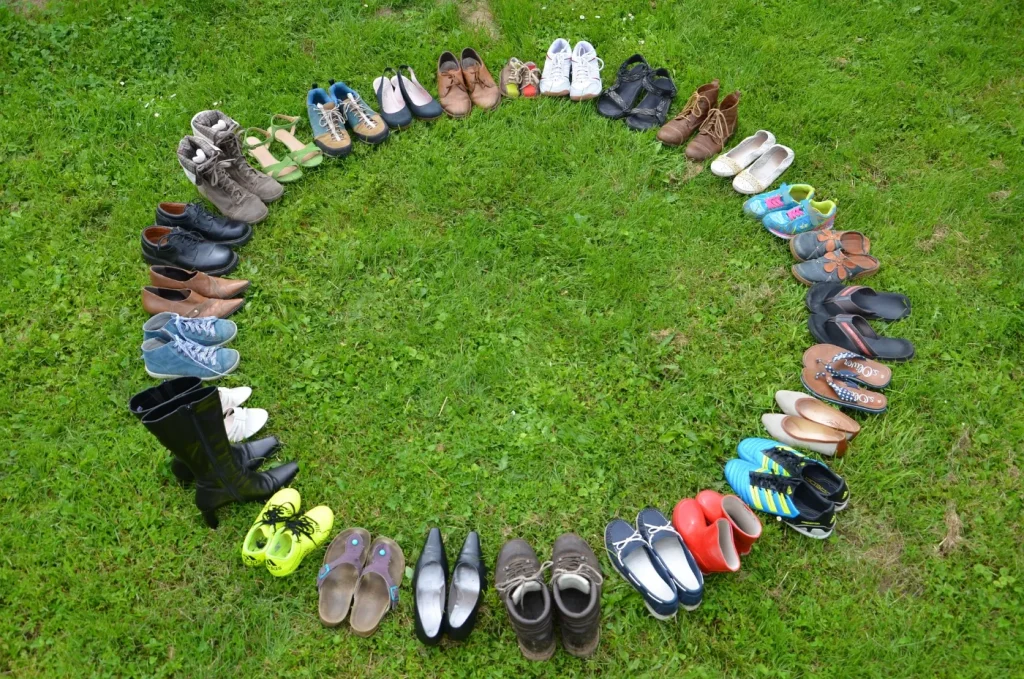
Pairs of shoes arranged in a circle on the grass
One way to acknowledge and address the interconnected legacies of colonialism and racism within photovoice health research is to adopt an anticolonial stance in framing our research and throughout its research phases.
Scroll to Top