
By Stephanie Lloyd, MA
“Participants moved from online learning, to in-person training, to ongoing virtual community building.”
This year, Photovoice Worldwide had the opportunity to continue our partnership with NSVRC by offering photovoice training to participants in Virginia and North Carolina. Building on feedback from trainings offered in Kentucky and South Carolina last year, we designed a hybrid virtual/in-person series. Participants began with a two-hour online introduction to photovoice that combined presentation, hands-on activities, and discussion. Before gathering in person, they took photographs related to a prompt, wrote captions, and listened to a photovoice podcast. Then, we traveled to Richmond, Virginia, in June and the Raleigh/Durham area in July for full-day, in-person trainings before reconnecting for two virtual Community of Practice sessions.
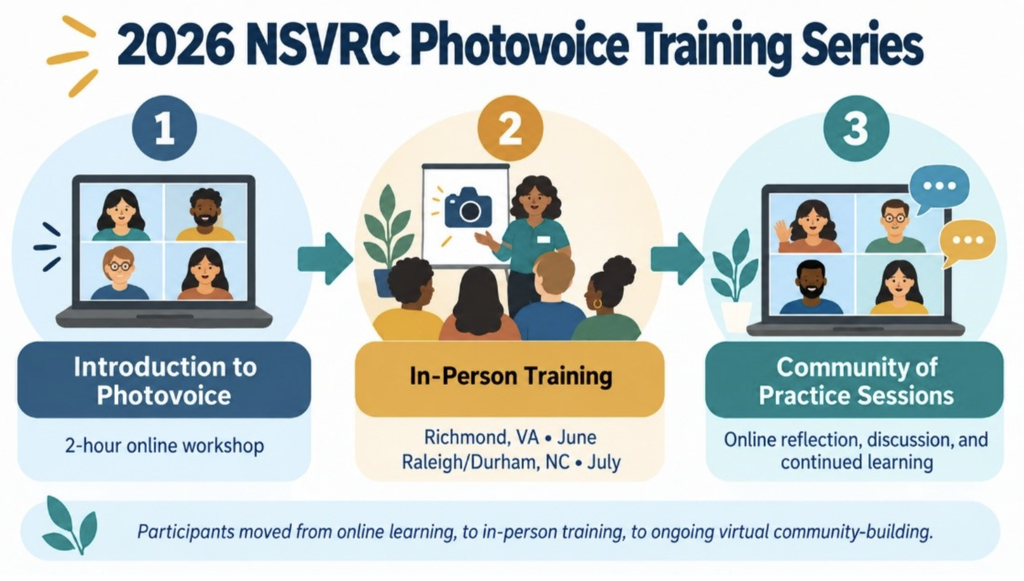
Starting Online: An Introduction to Photovoice
Mirroring the photovoice process itself, the series began by building a shared foundation. We offered the two-hour online introduction twice so participants could choose the session that worked best for their schedule as a prerequisite for joining the in-person training. Participants were introduced to photovoice, explored key ethical and safety considerations, and began thinking about how photographs and captions can be used to invite reflection and meaningful conversation.
Participants shared photos, discussed ethical scenarios, and considered how photovoice might apply within their own settings. Examples and conversations were tailored to the work represented in the room, which created opportunities to think through practical questions such as protecting participant and community safety, navigating consent and privacy, and creating conditions where participants can engage meaningfully in the process.
One activity also illustrated an important photovoice lesson: the same image can be interpreted in very different ways depending on who is viewing it, and the photographer’s own words can add critical context. Participants reflected on the range of meanings they saw in photographs and how captions helped them better understand the photographer’s intended story. From there, participants left the online session ready to try the process by taking photographs and writing captions in preparation for the in-person training.
In Person with Virginia Sexual & Domestic Violence Action Alliance
In June, we gathered in Richmond for a full day of learning, practice, and conversation. One of the strengths of the training was the diversity of organizations and perspectives in the room. The 21 participants represented roles ranging from violence prevention and health promotion specialists to executive directors, community engagement leaders, housing and family service providers, communications professionals, and data systems staff.
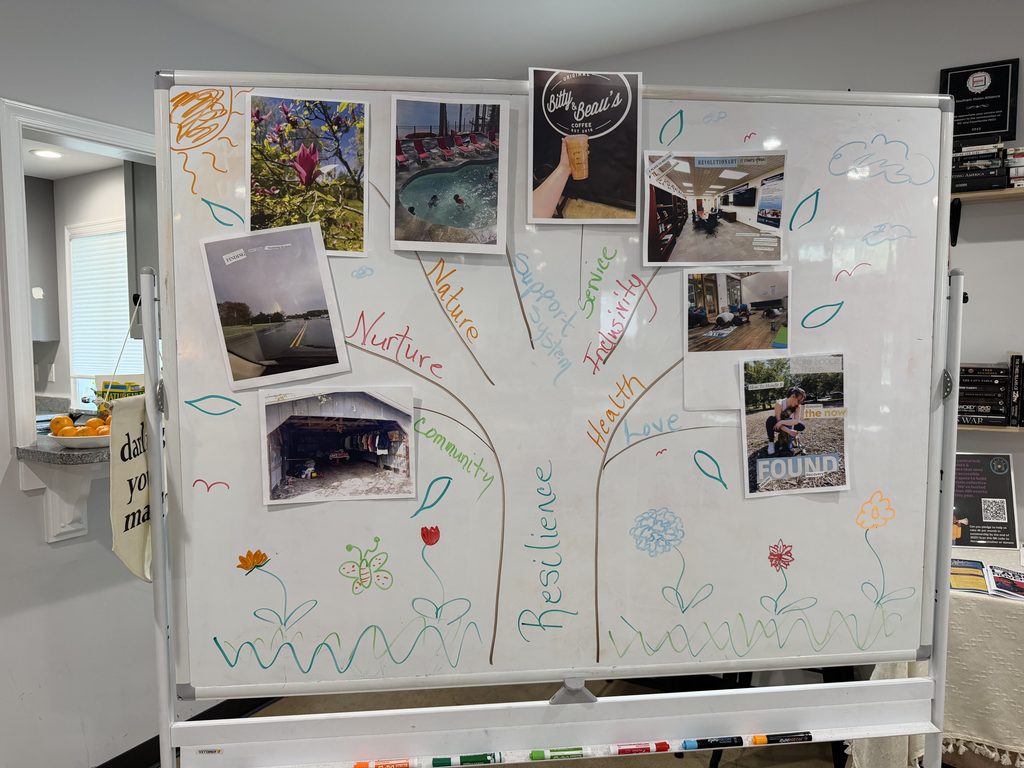
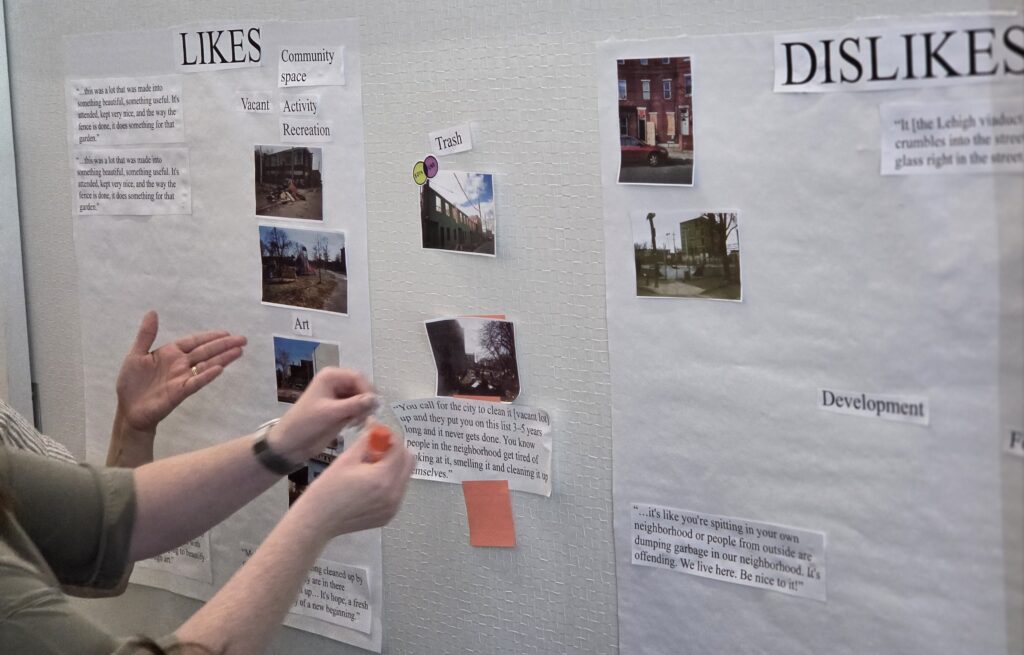
Participants arrived with photographs they had taken in between the two sessions, allowing us to move from learning the basics of photovoice to hands-on practice. Throughout the day, participants shared and reflected on photos, experimented with different ways of developing meaning and stories from images, and considered how photographs might be brought together to communicate broader themes and messages.
The training also created space to think ahead about facilitating photovoice in their own settings (e.g., who they might engage, what support participants would need, and what they hoped a future project might make possible). With both frontline practitioners and organizational leaders in the room, conversations continually connected the activities back to real-world practice: how photovoice might strengthen community engagement, center lived experience, and contribute to prevention, advocacy, and systems-change efforts.
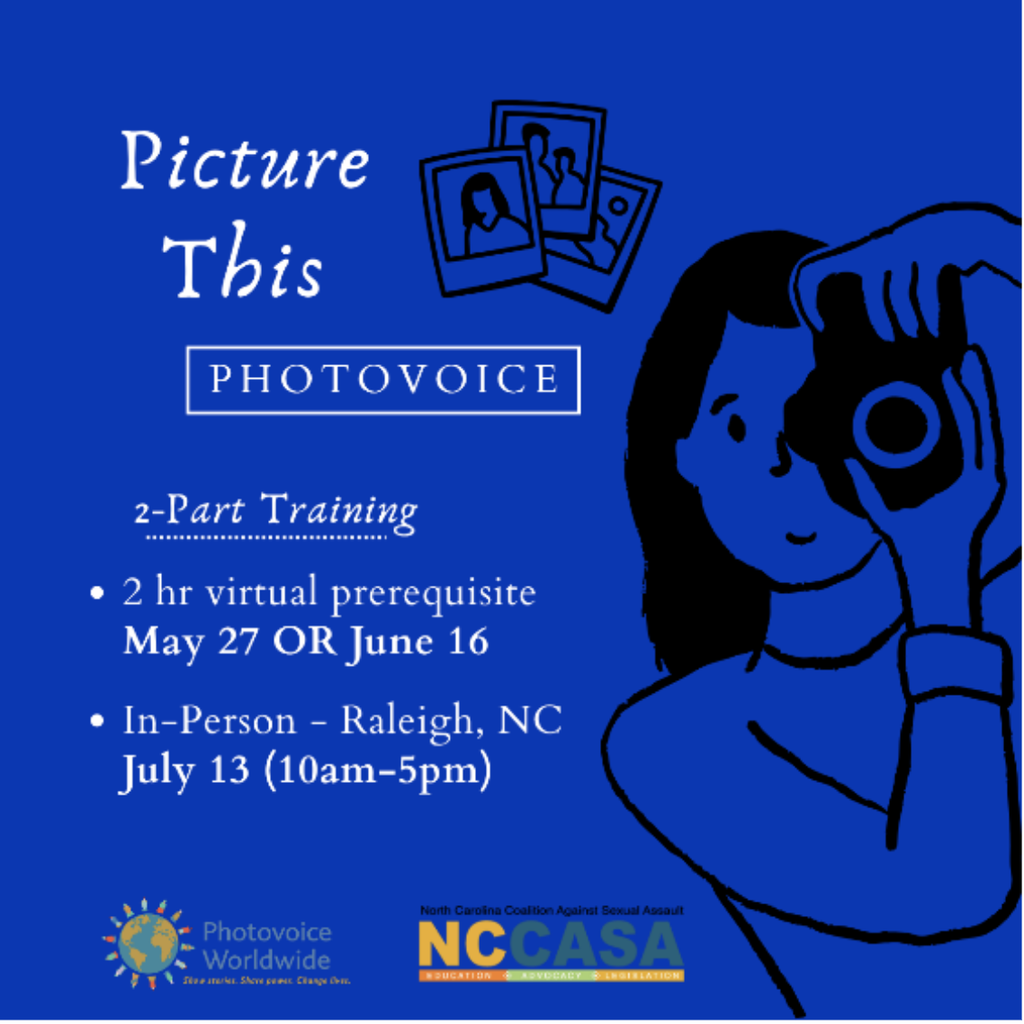
In July, we continued the series with 14 participants in the Raleigh/Durham area. The group included representatives from rape crisis centers and NCCASA member organizations, community-based organizations, and academic and community settings. Organizations represented included the Poe Center, InterAct, Orange County Rape Crisis Center, Safe Space, GCED Youth Network, Raleigh Youth Council, and The Carter Clinic. This mix of experiences created opportunities to explore how photovoice might be adapted across violence prevention, youth engagement, health and human services, research, and other community-based settings.
As in Virginia, participants arrived with photographs and captions, allowing us to spend the day sharing the stories behind their images, exploring different approaches to interpretation and captioning, identifying connections across photographs, and considering how photovoice findings might eventually be shared with others. Toward the end of the day, participants shifted toward imagining future applications:
- Who might they invite into a project?
- What support would participants need?
- And where could photovoice complement work already happening in their organizations and communities?
Again, the range of experiences in the room made it possible to explore how photovoice might look different across violence prevention, youth engagement, health and human services, research, and community-based settings.
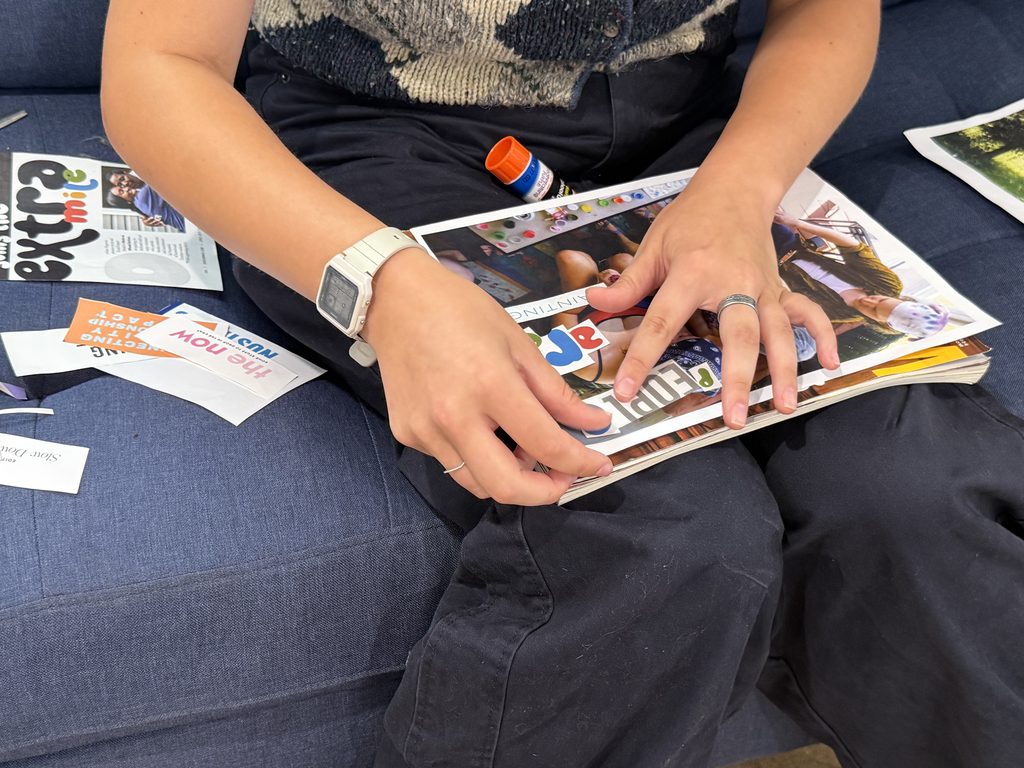
Community of Practice
Through our experience facilitating photovoice trainings, we have found that intensive learning is often only the beginning. Once participants return to their organizations and have time to reflect, new ideas (and questions) begin to emerge. We built two virtual Community of Practice sessions into the series to give participants an opportunity to reconnect, continue learning together across two states, and begin translating what they had learned into their own settings.
The first session focused on inspiration and possibility. Participants explored additional resources, looked at examples of photovoice projects from a variety of settings, and talked with colleagues about what those examples sparked for their own work. The examples were selected in response to participants’ interests and reflected a range of applications, including youth-led sexual and relationship violence prevention, healthy relationships, trauma-informed approaches, arts-based methods, and online adaptations. Small-group conversations then gave participants space to connect those examples back to their own communities and organizations.
By the second session, the conversation had shifted from “What could photovoice look like?” to “How might we actually make this work?” Participants brought emerging ideas and real-world challenges to the group, and the session became a space for collaborative problem-solving. Conversations touched on how to start small when staff capacity is limited, build on community groups and partnerships that already exist, develop accessible and meaningful photo prompts, create safe opportunities for participation, and think creatively about how photographs and stories might continue reaching people beyond a single event. Our discussion also surfaced practical realities around language, facilitation, safety, and creating engaging experiences particularly when working with youth or communities discussing sensitive topics.
What made this session especially valuable was hearing participants build on one another’s ideas, wherever they were in their planning process. Some participants were beginning to imagine full photovoice projects with youth or community members, while others were considering how photography, photo discussions, gallery walks, or other elements of the approach could complement work already underway.
One training participant captured that transition from learning to action simply:
“I plan to actually get started and come up with a concrete plan of how to incorporate Photovoice into the youth council meetings.”
Lessons Learned (or Reiterated)
These days, many of the trainings we deliver are virtual, so spending time ‘on the ground’ with participants in Virginia and North Carolina this summer was a welcome reminder of what makes in-person learning so valuable. Some of these lessons were not new to us, but it was affirming to hear them reinforced by participants in the room.
A Few Things We Are Taking With Us
- People are hungry for opportunities to learn together in person. There is real value in having time to practice the hands-on parts of photovoice, exchange ideas with colleagues, ask questions as they arise, and have a little fun along the way.
- The environment matters for photovoice. Small meaningful touches (such as: a welcoming space, good food and snacks, coffee, music, opportunities to move around, and enough time for conversation) can go a long way to help create the conditions for meaningful learning and connection.
- Participants bring tremendous knowledge and creativity to the process. Some of the strongest ideas throughout this series came from people who were new to photovoice but immediately began imagining how it could be adapted for their communities, organizations, and prevention work.
- Learning does not end when the training does. Providing follow-up opportunities to reconnect gave participants space to move from understanding photovoice to considering what implementation could realistically look like in their own settings.
We are incredibly grateful to NSVRC and our state partners for making this 2026 series possible and for helping create a training experience responsive to the people and organizations participating.
“It’s been great getting to work with you and Photovoice Worldwide these past two years. I’m so happy we’ve been able to offer this specific, in-depth training to RPE recipients in so many states – I know it has opened the door of possibility for so many people to bring in a whole new element to their prevention work.”
–Mo Lewis, Prevention Coordinator
Bring Photovoice Training to Your Network
One of the benefits of training an existing network, coalition, or group of colleagues together is that the learning can be shaped around the work participants are already doing and who is in the room. Examples, activities, discussions, and follow-up support can be tailored to the populations you serve, the questions your teams are exploring, and the realities of your organizations.
Interested in bringing photovoice to your coalition, organization, or professional network?
Reach out to us at info@pvww.org to explore a training designed around your goals, audience, timeline, and context. Whether your group is brand new to photovoice or ready to turn existing knowledge into practice, we’d love to design a learning experience that fits your needs!