Foundations of Photovoice

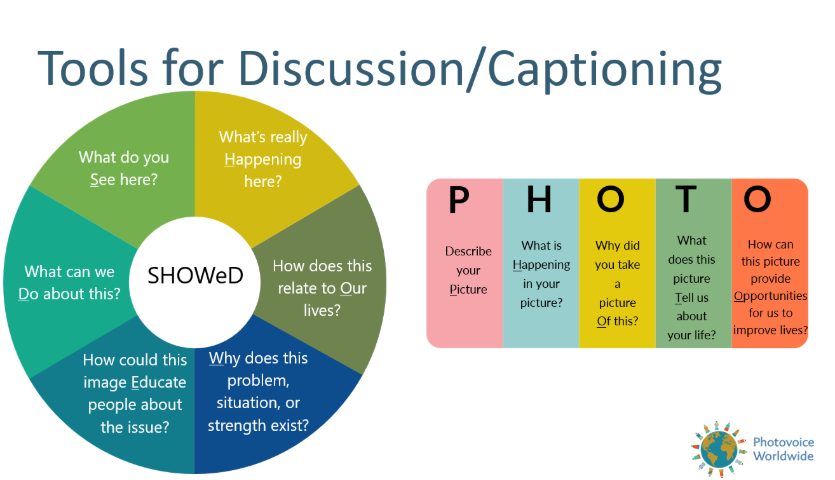
Photos and captions generated by photovoice projects can bridge research and community action by centering those most affected by an issue as co-creators of knowledge, empowering them to inform policies and programming, and advocate for change. The process includes 4 steps: answering questions with a camera; communicating in a group; observing commonalities; and communicating to power.
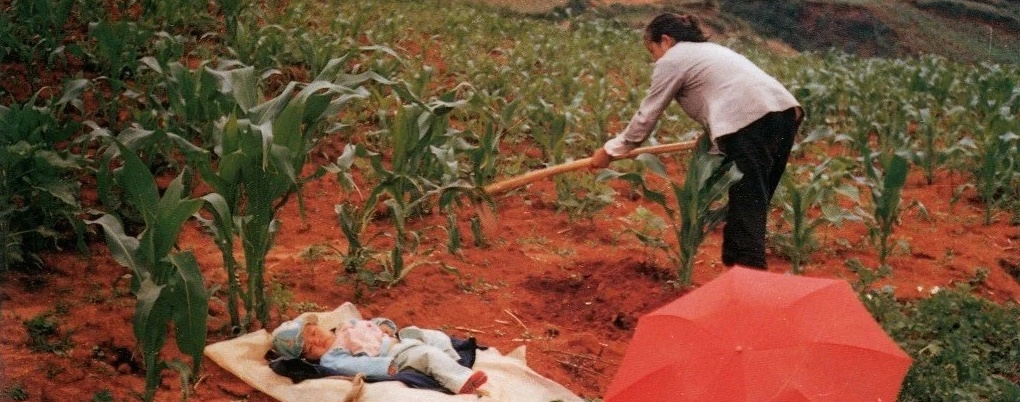
Woman working in a field of crops while her baby lays on a blanket on the ground close by.
Photovoice was developed in the early 1990s by Dr. Caroline Wang and Dr. Mary Ann Burris. Their first project took place in rural Yunnan Province, China. In that project, 62 village women volunteered to document their daily lives through photographs. Their images highlighted issues such as women's health, access to childcare, girls' education, sanitation, and economic opportunities.

a person casting a ballot in a ballot box
Democracy, at its best, isn’t just about casting a vote every few years. It’s about who gets to shape the conversation - whose experiences count as evidence, and whose stories are treated as data. By putting cameras in the hands of everyday people, it reframes who qualifies as an expert on community life. Photo by Tania Fernandez on Unsplash
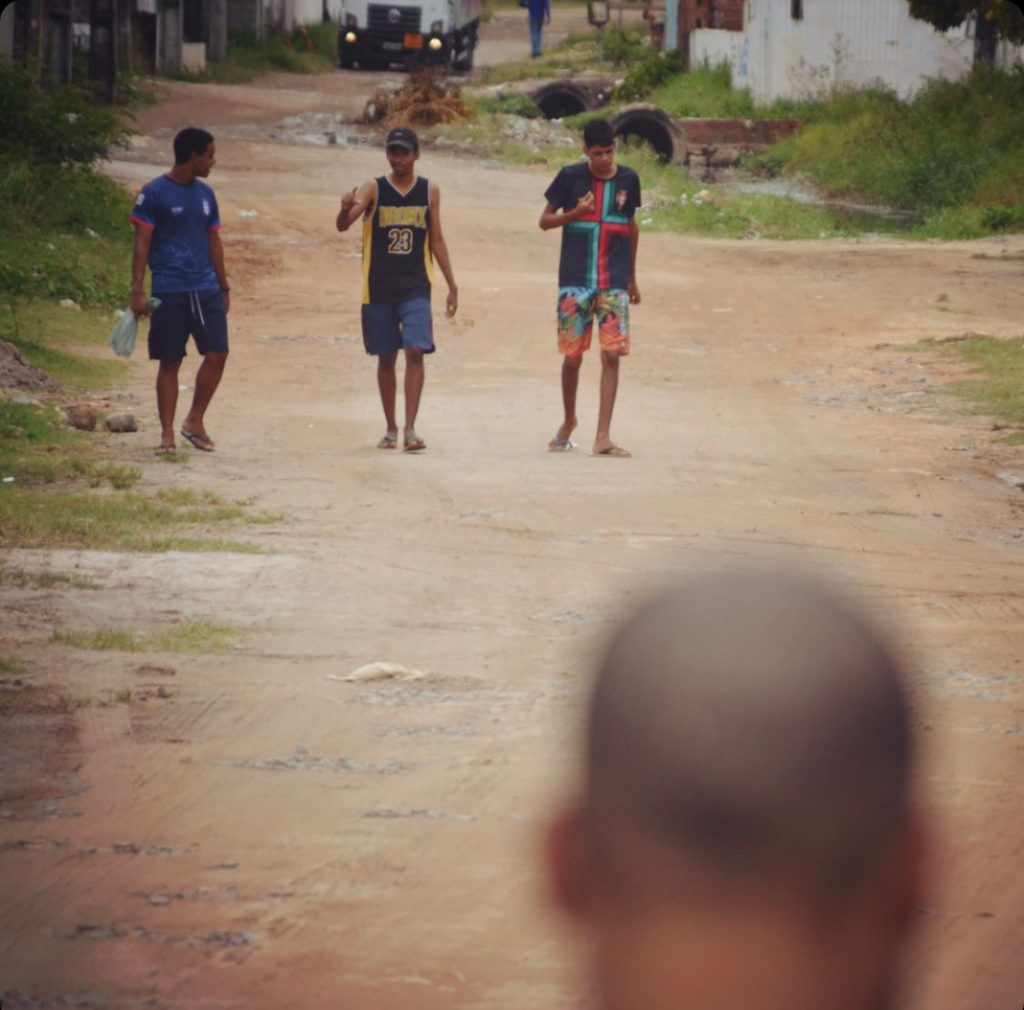
Photo of 3 boys talking to each other and walking on a dirt road
A photographer living in Northeast Brazil takes the Photovoice Worldwide Intensive School and, by learning about Paulo Freire's roots, is given a whole new perspective on the city she calls home and the work she is doing to try and lift the oppressed.
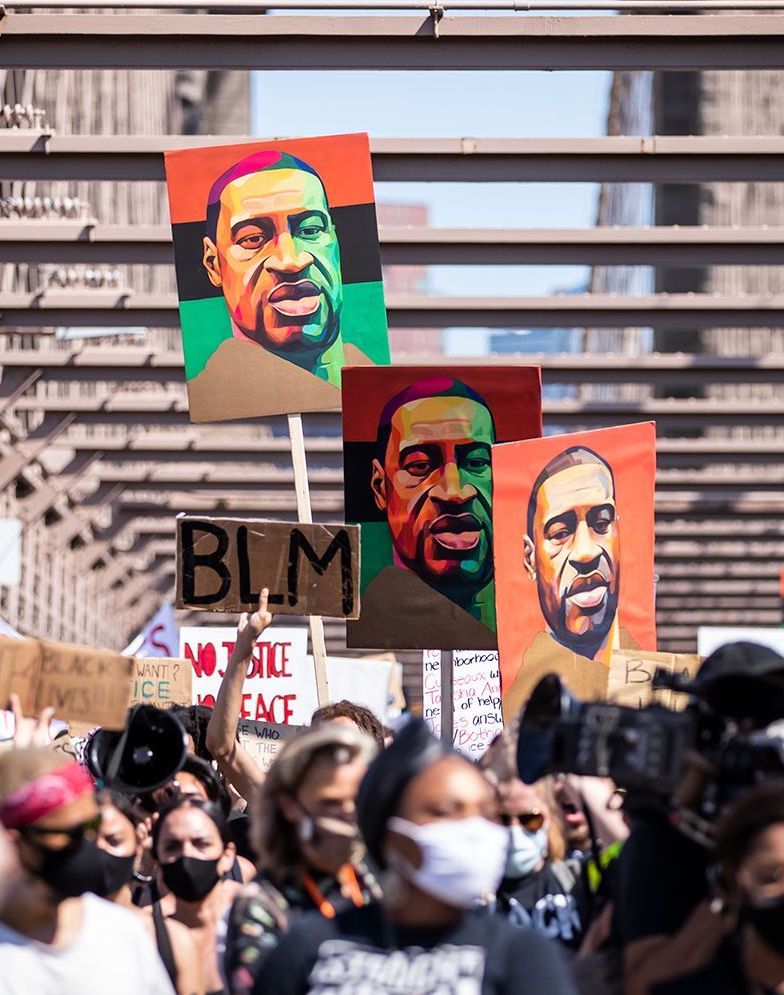
BLM posters at a protest
In a photovoice project, images are data. In daily life, images are data too. We are constantly producing data on social media. Through the videos, photos, and text people share, steps in the photovoice process are already underway.
Scroll to Top