
An interview with Erica Belli of PhotovoiceWorldwide
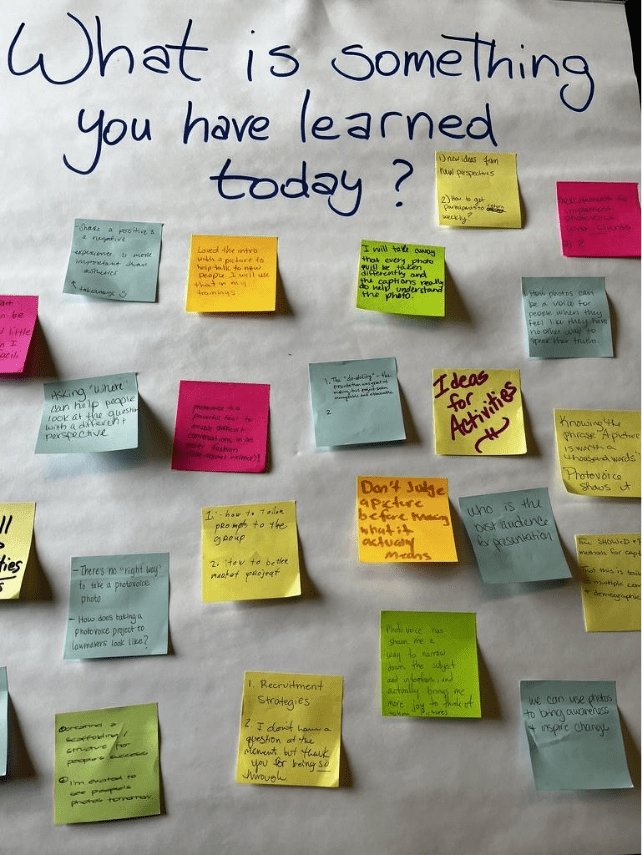
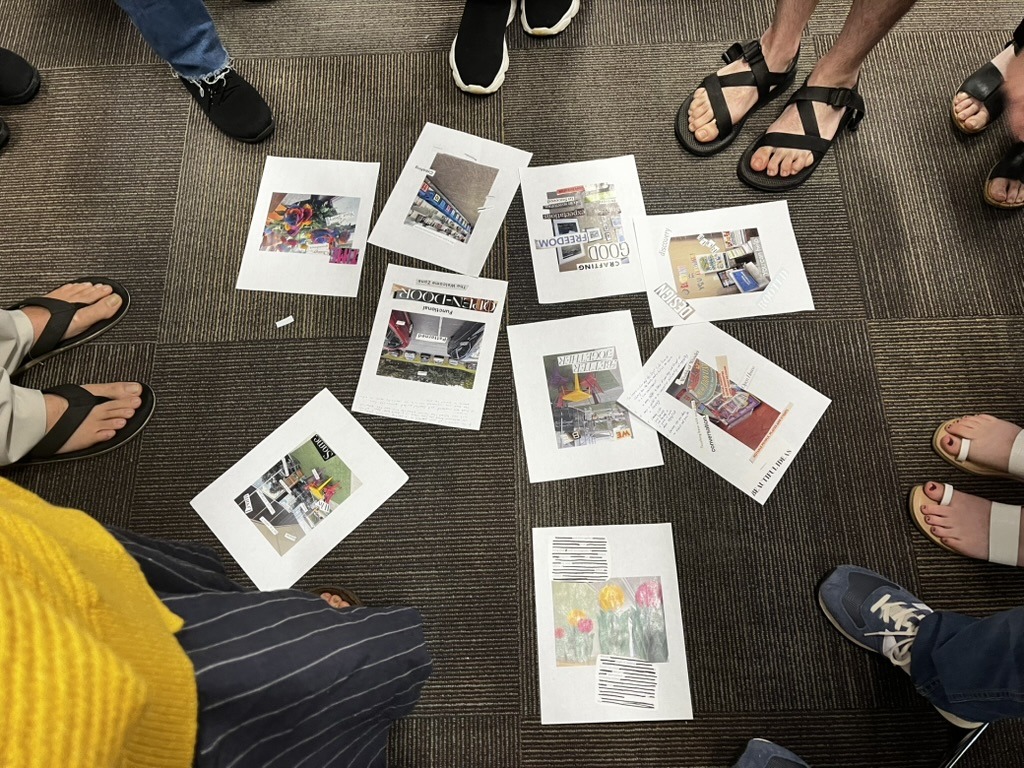
In the summer of 2025, Photovoice Worldwide instructors Erica Belli and Stephanie Lloyd hit the road with a series of three in-person, hands-on, photovoice trainings. On June 24, they taught a 1-day Bootcamp at the University of Kentucky (Lexington) on “Photovoice Facilitation” and “Photovoice Outcomes and Advocacy.” On June 26 and 27, they conducted a 2-day CDC-funded training, “Capacity Building in the Photovoice Method,” offered by the National Sexual Violence Resource Center (NSVRC) with the Kentucky Association of Sexual Assault Program in Lexington, Kentucky. And on June 30 and July 1, they presented the same 2-day training in Columbia, South Carolina, this time with the South Carolina Coalition against Domestic Violence and Sexual Assault.
Besides being an incredibly rewarding experience for the two trainers, the summer trainings presented an unprecedented opportunity for them to learn more about the in-person classroom and how it differs from virtual trainings conducted online. We interviewed Erica to learn more about this experience. Her responses are below.
PVWW: Obviously in-person trainings differ from online ones. What differences stood out for you this time?
EB: I love seeing people’s reactions to information and activities, hearing the buzz of their chit-chat as they work in small groups, and inviting folks to chime in with comments or questions at any given moment. It is great to be able to read a room at a glance and have an understanding of what they are grasping from the presentation. Sometimes (in virtual settings) the “cameras-off” mode makes it harder to have that “full presence” feeling you have with in-person trainings.
PVWW: What are some interesting ideas that surfaced during the trainings?
EB: One participant spoke about the need to build safe space through our actions, not through our words only. Safety needs to be built, and it can only feel real when true community is achieved. We, as the facilitators, are responsible for our group’s experience, which includes making the efforts necessary to build community around our project and space. Another interesting remark was about the use of alternative ways to caption, specifically, captions that do not include written words. Too often we forget to value oral narrations and storytelling, which might feel more in line with native or cultural traditions, for example.
PVWW: What is something you learned as a result of these in-person training sessions?
EB: I was especially grateful to learn more about hotspot mapping, a data visualization method used to identify areas where certain behaviours or conditions are concentrated. Some of our participants applied hotspot mapping with high school students to map safe and unsafe areas in their schools. Integrating photovoice into this kind of work can give youth and their peers the chance to visualize their surroundings and reflect on their experiences. Hearing ideas on how to implement this integration was very exciting.
PVWW: What core beliefs (of yours) about photovoice were reinforced as an outcome of these particular trainings?
EB: That photovoice can be used together with other methods! I mentioned hotspot mapping before, but there was also conversation on weaving in photovoice around Theatre of the Oppressed, a participatory theatre method designed as a tool for social change—where the audience becomes active in exploring and transforming real-life situations of oppression. Interestingly, the father of this method, Augusto Boal, shares nationality with Paulo Freire, as they are both Brazilians, and were active during similar time periods.
PVWW: Did any novel ideas come out of the trainings?
EB: One interesting idea that was shared by attendees was to use photovoice in their offices! Many people shared how excited they were to bring this to their next team meeting, whether it was bringing a photo to share about their week, or going more in-depth as to identifying challenging work areas and possible solutions. I was grateful we could offer some guidance on this practice. PhotovoiceWorldwide’s meetings often begin with photo-sharing, and we do provide team-building activities for organizations and companies as part of our services.
PVWW: What would you say to people who are thinking about doing an in-person training versus an online one for their organization?
EB: Working in both spaces can be beneficial for your organization. Evaluate with your team their learning needs, as well as any logistical considerations they might have. There are benefits to both platforms. Decide which is more accessible for your team. Also, think about a hybrid approach. Would meeting online for some pre-work and then have an in-person day prepare your group for their next big project while being logistically more apt?
PVWW: Is there anything you would like to add?
EB: All three groups were great to work with. It is always amazing to have people from different spaces and work contexts come together and bringing their expertise into photovoice, as well as hear how they plan to use it or adapt it in their own work. As they are experts of their specific context/population and already working on different engagement programs, learning how the photovoice method can be applied to their existing work—and make a difference for them and their communities—is exciting. It sparks a lot of ideas for future photovoice projects!
Whether in-person, virtual, or hybrid, Photovoice Worldwide is ready to work with you to design and implement a single-day or multi-session photovoice training, workshop, or bootcamp tailored to your organization’s needs. Contact us at team@pvww.org to schedule a free, 15-minute exploratory consultation.

For another perspective, read our previous blog posts about virtual photovoice:
Tips for Conducting a Virtual Photovoice Project
Can I Do a Virtual Photovoice Project? Yes, You Can!
About Erica:
Erica Belli is an educator, facilitator, and project coordinator at PhotovoiceWorldwide. She teaches a 5-session, 10-hour course in “Arts-Based Methods for Creative Facilitation” and provides mentoring in the same field. Contact Erica at erica@pvww.org to inquire about upcoming trainings.