visual research
Do you have an idea for a photovoice project, but are afraid you won’t be able to carry it out because of budget constraints? I'm here to tell you: Have no fear! Some of the most meaningful work I have seen — and been part of — has happened with borrowed phones, community hall tables, and photos printed at a corner shop. Don't let a lack of funding or resources destroy your dream.
This photovoice study invited twelve Latin American migrants aged 54+ living in Adelaide — South Australia’s fifth largest city — to share their stories. Using photographs and narratives, they explored how they see and feel about connection and loneliness, bringing awareness to the meaning of culture and belonging in their everyday lives.
In summer 2025, PVWW instructors hit the road with a series of in-person photovoice trainings. We interviewed one of them about the experience and her takeaways. The results may surprise you!
In this photovoice project, six young Bedouin women took photos that challenge stereotypes of Bedouin women as passive recipients of cultural heritage, instead, appearing as active agents shaping their own narratives. Their efforts represent not only a personal journey, but also, a social commentary on the roles and expectations of Bedouin women in a changing world.

Nagham received a grant from Ettijahat – Independent Culture to lead her first independent photovoice project, focusing on the cultural identity of young Bedouin women in Lebanon. This project has been deeply personal, shaped by her close collaboration with six young women who shared powerful stories about belonging, gender roles, identity and everyday resilience.
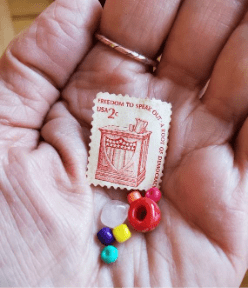
A random "found object" causes Dr. Lorenz to reflect on the power of photovoice to develop shared understandings and promote Democracy. “...I was cleaning out my beads as I prepared to move to Virginia. A small stamp had been hanging around, hidden among the random beads that somehow linger on my art table after I finish a necklace.”