
by Marcella Meneguello
According to the World Health Organization (WHO), loneliness among older adults is widely recognised as a public health concern affecting their mental and physical well-being.1
Many older adults from culturally and linguistically diverse (CALD) backgrounds find that growing older in a new country presents challenges that often go unnoticed. In Australia, a large percentage of the population is made up of migrants — approximately 37 per cent of older Australians were born overseas.2 For older migrants, this experience can be intensified by language barriers, cultural disconnection, and distance from family3,4,5. However, assumptions about migrant loneliness often miss the nuance of personal and cultural experiences. Thus, gaining insights into how older people navigate social connections and loneliness is vital for promoting well-being and inclusion.
This photovoice study invited twelve Latin American migrants aged 54+ living in Adelaide — South Australia’s fifth largest city — to share their stories. Using photographs and narratives, they explored how they see and feel about connection and loneliness, bringing awareness to the meaning of culture and belonging in their everyday lives.
Participants’ choices of images and narratives were guided by two questions: What do social connections mean to you? What does it mean to feel lonely? Photos ranged from community gatherings to quiet natural landscapes, each image sharing a unique story of connection and culture. In addition, many of the participants’ experiences spoke of resilience, illustrating how resilience is built through maintaining relationships, drawing on community support, and finding moments of peace or meaning even in challenging times.
Behind the Lens: What the Photos Revealed
Three powerful themes emerged through the images and interviews: The Experience of Loneliness, Connectedness Beyond the Social, and Cultural Anchors.
1. The Experience of Loneliness
WHO describes loneliness as the distressing subjective experience — or ‘social pain’ — caused by a gap between the social connections one wishes for and those actually experienced.1
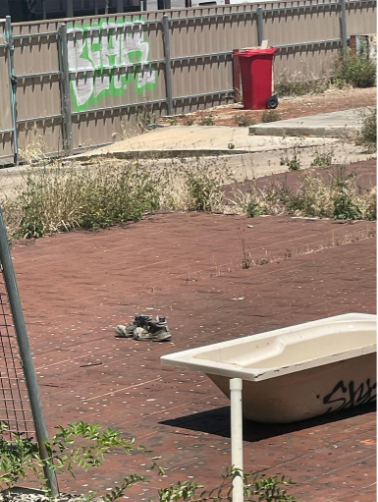
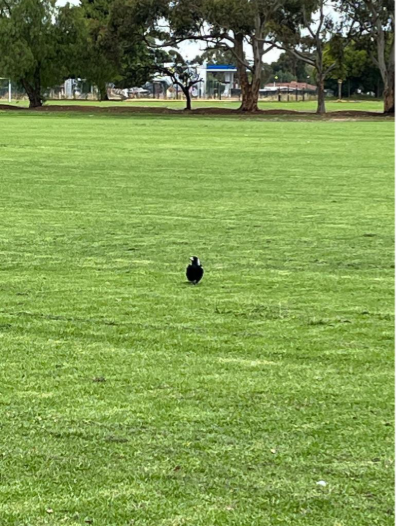
Contrary to expectations, and even other studies in this field, many participants shared that they didn’t actually feel lonely. Instead, they spoke about strong ties with local migrant communities and family. A small number, however, described how loneliness could be represented — as shown in these photos and narratives:
2. Connectedness Beyond the Social
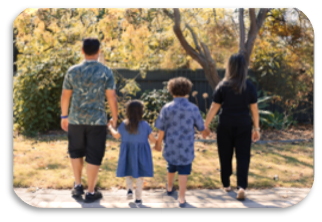
Family was portrayed as a great source of belonging and connection, as represented in this photo and caption:
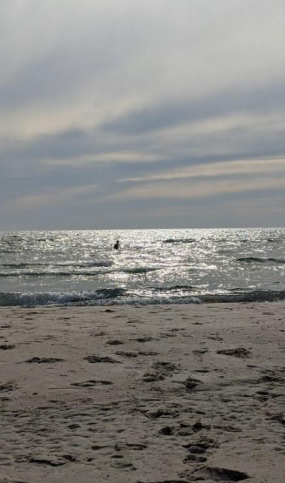
Interestingly, other photos revealed that participants felt connected in their solitude, which wasn’t seen as negative. Several participants captured moments of peaceful stillness — the beach, flowers, contact with animals (pets) and nature, and spiritual grounding — showing that well-being doesn’t only come from traditional social interaction. Several examples follow.
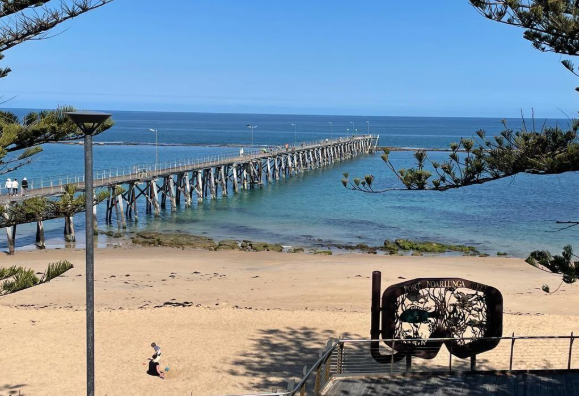
Beach (Participant 1) — ‘Because I love walking on the beach. I love seeing the blue sea, when it’s sunny, it’s bluer. It’s very good. It does me a lot of good. But it fills me with something, I don’t know what. It’s something that gives, I don’t know, amplitude, gives joy, I don’t know.’
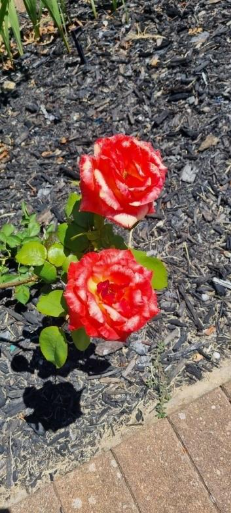
Beautiful life (Participant 8) — ‘Because this is life, they grow, and they can get the rose,
for example, after a little while, they die. But they don’t really die because after the flower
comes again …this is the cycle of life.’ … ‘When they are all flowers, they make me happy,
they make me feel good.’


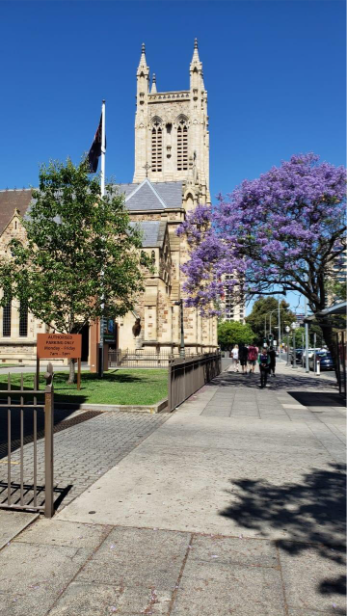
These reflections challenge the assumption that being alone is synonymous with loneliness, highlighting the importance of family, nature-connection, and self-connection.
3. Cultural Anchors
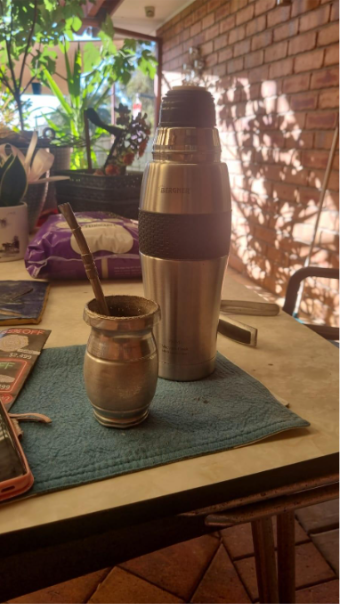
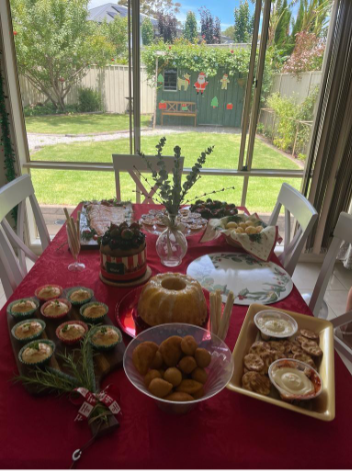
Culture emerged as a deeply grounding force. Participants described staying connected to their identity through food, gatherings, and shared traditions with others from similar backgrounds. At the same time, they acknowledged the difficulty of integrating into Australian culture and often preferred to bond with other migrants who “just get it.”
These last few photos show traditional, visual symbols that reflect pride, resilience, and a deep sense of belonging rooted in cultural connection.
Conclusion: Rethinking Loneliness and Connection
This photovoice project reminds us that loneliness is not a one-size-fits-all experience—especially for older CALD migrants. The participants’ stories offer a more nuanced understanding than mainstream narratives.
Rather than remaining isolated in their adoptive countries, many had built rich lives around community, spirituality, contact with nature, and other migrants’ culture. Their sense of well-being and connectedness came not just from social events, but from places of quiet reflection and shared identity. These findings highlight how connection is multifaceted — and how the mindset, family, culture, and community act as protective layers against loneliness.
Acknowledgements
Supervisors: Associate Professor Clare Littleton and Associate Professor Rachel Ambagtsheer.
Community Support: Patricia Rios, leader of the Hispanic Women’s Association of South Australia (HWAofSA). Ana Lucia Marques Britto, Vice President and Public Officer of the Brazilian Association of South Australia (BASA).
Torrens University supported this research under the Tuition Reduction Benefit Employee program.
Ethics: This study was submitted to the Human Research Ethics Committee (HREC) of Torrens University Australia and approved in December 2022 under register number 0181.
About the author

Dr. Marcella Meneguello is a Brazilian-born photographer, photovoice facilitator, and multidisciplinary lecturer and researcher based in Adelaide, Australia. With an academic background in health science and community health, she works at the intersection of creative practice and critical inquiry, using participatory visual storytelling to connect academic knowledge with lived experience. Through photovoice, Marcella collaborates with individuals and communities to co-create photographs and narratives that amplify voices, foster critical dialogue, and promote equity and social justice.
Link: www.marcellameneguello.com/photovoice
Footnotes:
1 World Health Organization (WHO) (2021). Advocacy brief: Social isolation and loneliness among older people. https://www.who.int/publications/i/item/9789240030749
2 Australian Institute of Health and Welfare. (2024). Older Australians. Commonwealth of Australia. https://www.aihw.gov.au/reports/older-people/older-australians
3 Fokkema, T. (2023). Loneliness among older migrants. In S. Torres & A. Hunter (Eds.), Handbook on migration and ageing (pp. 290-300). Edward Elgar Publishing.
4 Wu, Z., & Penning, M. (2015). Immigration and loneliness in later life. Ageing & Society, 35(1), 64-95.
5 Zhao, I. Y., Holroyd, E., Garrett, N., Wright-St Clair, V. A., & Neville, S. (2023). Chinese late-life immigrants’ loneliness and social isolation in host countries: An integrative review. Journal of Clinical Nursing, 32(9–10), 1615–1624). https://doi.org/10.1111/jocn.16134