
Photovoice on a Budget
How to run a meaningful photovoice project with the resources you already have.
By Erica Belli
Working with photovoice and participatory photography over the years, I have heard a persistent comment: Doing photovoice can be expensive!
While I agree that photovoice requires a budget – and, depending on your context, that you might need substantial funding – I also know from experience that it’s possible to do photovoice on a shoestring. Do you have an idea for a photovoice project, but are afraid you won’t be able to carry it out because of budget constraints? I am here to tell you: Have no fear! Some of the most meaningful work I have seen — and been part of — has happened with borrowed phones, community hall tables, and photos printed at a corner shop.
This post is for facilitators, community workers, researchers, and organizers who want to do photovoice well, but on a budget that may not match their ambition. The following is what matters most when your budget is tight.
Cameras
One of the most common questions I get from people starting out with photovoice has to do with what kind of cameras to buy. Before thinking about purchasing, let’s assess the situation: most participants already have one in their pocket. Smartphones are more than adequate for photovoice, as the power of an image comes not from its technical quality, but from what someone says about it. And, if participants already know how to operate their phone cameras, this minimizes the time needed for technical training. If phone access is inconsistent across your group, disposable cameras present a solid option. They are cheap, durable, and easy to use, and there is something about having only 27 shots that focuses attention in a useful way.
In any event, before purchasing anything, check to see what is available to borrow: libraries, universities, and community media centers often have equipment-lending programs.
In a recent project with refugees, we learned from a pre-survey that although prospective participants did have phones, many had run out of memory and couldn’t take pictures. Through an organization that provides free phones for refugees (Phones Without Borders, whom I thank once again for their support in Zurich, Switzerland), we were able to ensure everyone had a working device, and participants got to keep the phone afterwards.
Spaces

Libraries, community centers, religious institutions, and local nonprofits often have meeting rooms available for free or at minimal cost, especially when you define your project clearly. Descriptors such as “Community-based research” and “community project” tend to open doors.
If you or your group are already embedded in an organization such as a community-based NGO, clinic, school, or social service, inquire if you can use its spaces. Familiar environments are often more comfortable for participants than neutral ones anyway.
Don’t overlook outdoor spaces or cafés either. With a small group of, say, four to six people, many places are happy to host you for a couple of hours for the price of a cup of coffee.
In a community project on urban regeneration, we ran our photovoice sessions by weaving in community walks paired with shorter indoor time at a local library. Everyone loved the walks as they sparked conversations about photos and experiences in real time, while also creating natural openings to talk about the technical side of photography.
Printing and Sharing
A formal gallery exhibition is one way to share photovoice work, but it is not necessarily the most effective one.
Once you have selected images with participants, a local print shop or online printing service can produce decent prints at relatively low cost. For larger display formats, consider printing on blueback paper – the same material used for street posters. It is significantly cheaper than photo paper and holds up well in public spaces.
If you choose a digital presentation, then options such as a simple slideshow, free Canva page, or basic Google Sites website can still reach decision-makers and funders effectively.
Community walls work too. A display in a clinic waiting room, school cafeteria or hallway, town hall kiosk, or a glass-enclosed case in a public library will reach the people who actually move through those spaces — often more directly than a one-night event.
Regardless of your scenario, be sure to invite your co-researchers to choose what gets shared and how it is arranged. This takes nothing extra from the budget and puts the decision-making where it belongs.
The most valuable resource in any photovoice project is time:
— Erica Belli
time to engage without pressure, time to discuss photos in a relaxed environment,
time to take pictures without feeling rushed.
What Is Worth Spending On, If Your Budget Can Handle It
FOOD. Even simple snacks change the atmosphere of a session. People think and share differently when they are not hungry.
TRANSPORT. If getting there is a barrier, subsidizing even part of the cost can be the difference between consistent participation and attrition.
PRINTS FOR YOUR CO-RESEARCHERS. Even if your exhibition is a digital one, printing out a small set of images for each person to keep is meaningful, and doesn’t need to break the bank.
The Absolute Minimum
At the absolute minimum, a photovoice project needs:
- a group willing to engage,
- a facilitator to hold the process,
- a way to make images,
- time to discuss them,
- and a plan to get the photos and captions in front of whomever needs to see it.
Most important, it needs ethical facilitation, thoughtful planning – with the flexibility to respond to what unfolds – and genuine care for participants and their experiences.
I would argue that the most valuable resource in any photovoice project is time: time to engage without pressure, time to discuss photos in a relaxed environment, time to take pictures without feeling rushed.
Final Words of Advice
Start with what you have. Evaluate your budget and allocate it to what matters most for your participants. Whether the need is transport, prints, or food, you know the context best, especially if you assess the group’s situation before starting your project. And always remember to bring your care, curiosity, and enthusiasm. Those don’t cost a thing.
About the Author
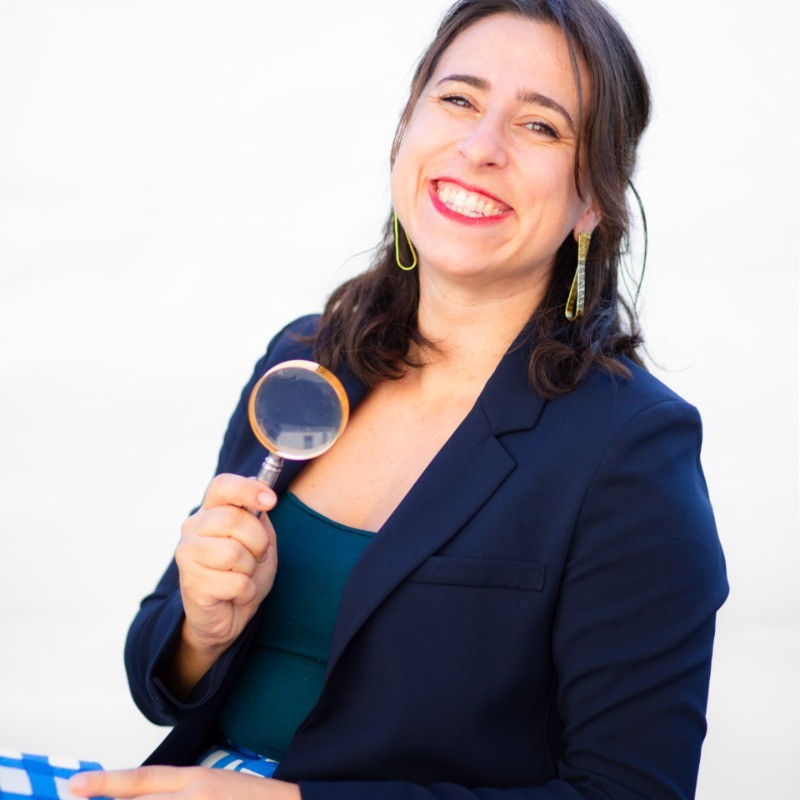
Erica Belli is a facilitator, photographer and artist with a vivid interest towards photovoice, visual participatory methods, and therapeutic photography. Since 2018, she has been a facilitator and educator working with diverse populations, focusing her efforts on youth, migrants, and trauma. In 2021, Erica joined the PhotovoiceWorldwide team as an educator and facilitator of the qualitative, participatory, research method #photovoice. In her current position she supports consultancies, trainings, and projects for institutions, organizations, and universities looking to learn and facilitate photovoice ethically, safely, and succesfully. Erica brings her expertise in arts-based methods, photography and the therapeutic arts into photovoice, specialising in facilitating and training with tools that can support participation and inclusion.
Looking for support with facilitation or training? [Learn more about us here.]
[Erica teaches Facilitating Photovoice: Practical and Creative Approaches]