
By Stephanie J. Lloyd
Photovoice is more than a creative method; it is a powerful way to generate mutual learning, strengthen communities, and inform real-world decisions. By inviting individuals to become participants/co-researchers and document their lived experiences through photography and dialogue, photovoice shifts research from studying people to learning with people. Across settings around the globe (from youth development and public health to substance use recovery and environmental justice) photovoice has demonstrated why it matters to participants, communities, and policymakers alike. Below we talk about four reasons why photovoice matters, share examples, and conclude with why photovoice continues to matter in a world grappling with complex social challenges.

Photovoice Creates Opportunities for Mutual Learning
Photovoice levels the playing field. When participants share images and captions, conversations unfold among equals, so that community members, researchers, and decision-makers all talk together. For example, in a photovoice project with postpartum Black mothers, participants were invited to share their perspectives on healthy eating to help inform the design of a future meal delivery program. Photovoice served as one component of the broader study, creating a space for their voices, needs, and lived experiences to shape a larger conversation about supporting Black women’s health. Through the photovoice sessions, it became clear that post-partum moms’ attention to healthy eating is much more focused on their children and happens as a result of the food choices they make for their kids (Hurt, 2026). Learn more about this project here: https://www.photovoiceworldwide.com/healthful-eating-in-the-postpartum-period-a-study-on-nutritional-challenges-facing-black-mothers/ (Photo and caption by a co-researcher in the The HealthFul EAting in the PoSTpartum Period Study (F.E.A.S.T.) led by Dr. Michelle Ogunwole.)
Photovoice Supports Healing and Recovery
Photovoice is increasingly used in healthcare and recovery settings because it allows participants to reflect on their journeys in visual, relational ways. For example, a photovoice study exploring recovery from substance use (Smith et al., 2023) found that participants used images to express social isolation, resilience, and hope. Group discussions helped transform individual narratives into collective insight, resulting in reduced stigma and fostering solidarity. In these contexts, photovoice becomes both a research tool and a healing practice. For example, a CHIR-funded initiative titled, “Nothing about me without me: Co-designing mental healthcare improvements with young adults from diverse communities, their families, and service providers,” engaged young adults and their caregivers in separate photovoice groups that allowed them to talk about their lived experience of navigating mental health challenges. Watch the project’s Digital Documentary, titled: “Through Our Eyes” here: Young Adult Mental Wellness – Arts-Informed Methods.
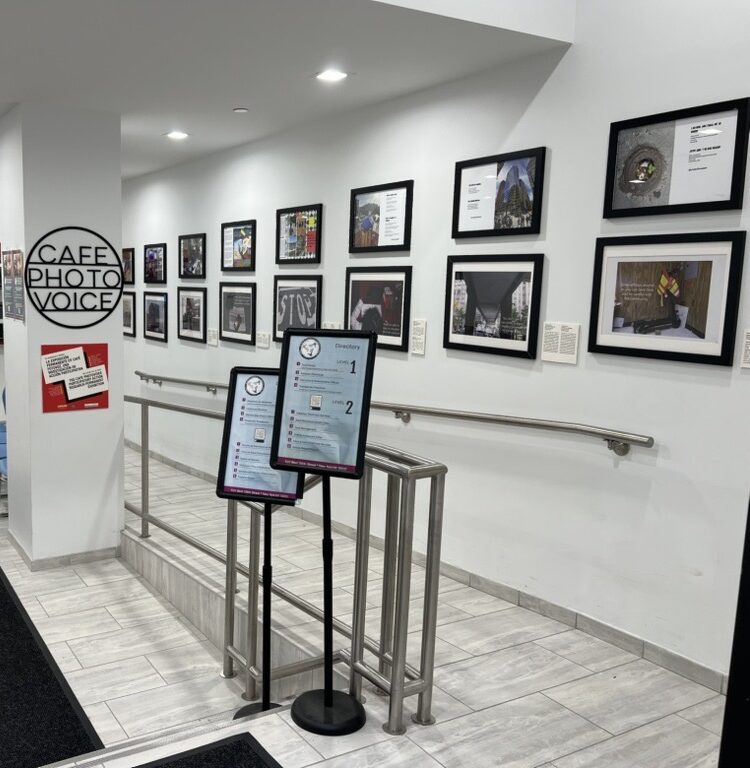
Another way photovoice can support healing and recovery is by embedding the method in program evaluation. For example, in the project Café Photovoice individuals receiving community mental health services used photos and narratives to reflect on their experiences with care and propose improvements, transforming evaluation into an inclusive, action-oriented process. The project demonstrates how photovoice can surface insights, foster dialogue, and inform more responsive and person-centered mental health programs (Adames-Torres, et al. 2024; Adames-Torres, 2023). You can learn more about the Café Photovoice project here: Fostering Hope and Resilience through Photovoice.
Photovoice Gives Participants a Voice in Systems that Affect Them
Photovoice rearranges traditional research hierarchies. Co-researchers often choose the topics, generate the data, and interpret the findings. When lived experience becomes data, it can influence awareness, attitudes, programs, and policies. Longtime PhotovoiceWorldwide friend Maria Paiewonsky conducted a project many years ago that we continue to reference as a clear showcase of photovoice uplifting under-represented voices. In her work, Paiewonsky centers the voices of students with intellectual and developmental disabilities (IDD) who participated in inclusive postsecondary education (PSE) programs, highlighting how attending college shaped their experiences, identities, and future opportunities (Paiewonsky, 2011; Lorenz & Paiewonsky, 2015; Hafner, 2019). Students with intellectual and developmental disabilities described college as a transformative experience that strengthened their independence, sense of belonging, and future aspirations. Beyond academics, the social connections and identity shift to “college student” played a critical role in shaping their confidence and life trajectories.
Photovoice Informs Change Through Public Sharing
When groups share their photovoice findings with broader audiences, that is where research meets action. Exhibits, websites, booklets, and policy briefings allow images and stories to reach decision-makers directly. When done well, public sharing creates ripple effects far beyond the original group. Here are a few examples of online photovoice products that live on and have been shared more widely:
- A Quick Walk-Through of the Cafe Photovoice Exhibit: https://youtu.be/x59UIAT0Wf0?si=S-sKf-lOxzBO2L9Z
- Cafe Photovoice Explained: https://www.youtube.com/watch?v=4EaY9yDUHsI
- Young Changemakers with a Camera: https://www.youtube.com/watch?v=f8abMJGuCwM
- Picturing Financial Security: https://www.artsteps.com/view/63f4af4daac9e8ceaa426451
- USING FEMINIST RESEARCH METHODS TO ADVANCE GENDER EQUALITY: A Photovoice & Cellphilming exhibit by youth in India: https://www.artsteps.com/view/62811b6e34c3beb96e95acfc
Why Photovoice Continues to Matter
To summarize, Photovoice:
- Creates mutual understanding across communities
- Builds critical thinking and collaboration skills
- Supports healing and reflection
- Provides decision-makers with powerful, real-life data
- Elevates participants voices
- Informs change in awareness, programs, and policy
Most importantly, photovoice reminds us that expertise lives in experience. When people are invited to document and interpret their own lives, research becomes more inclusive, more respectful, and more actionable. In a world grappling with complex social challenges, photovoice offers something both simple and transformative: a camera, a conversation, and a commitment to listening.
Learn more about what photovoice is, how it works, who can do it, and it’s history https://www.photovoiceworldwide.com/what-is-photovoice/
About the author: Stephanie Lloyd is a Senior Consultant and Facilitator at PhotovoiceWorldwide who supports organizations confidently plan, facilitate, and evaluate photovoice projects. She has trained individuals around the world to use photovoice as a tool for community engagement, evaluation, and systems change. As an AmeriCorps alum, she believes in the power of participatory storytelling to elevate voices and inspire action.
References
Adames-Torres, Julissa. (2023). Café Photovoice: Addressing systemic and personal traumas through a community based participatory lens. Poster presented at: American Public Health Association Annual Meeting, November 2023, Atlanta, GA. https://www.photovoiceworldwide.com/fostering-hope-and-resilience-through-photovoice/
Adames-Torres, J., Newransky, C., Birchett Benash, S. Lloyd, S. & Rozario, R. (2024). Café Photovoice: A participatory approach to program evaluation in community mental health in the United States. In De Maeyer, J., Florence, M., Vanderplasschen, W., Yu, M., (Eds.) Springer Handbook on addiction, recovery and quality of life: Cross-cutting perspectives from around the globe. https://doi.org/10.1007/978-3-031-65873-0
Hafner, D. (2019). Voices of Experience: Students Share College Search Advice. How To Think College, Issue No. 6. Boston, MA: University of Massachusetts Boston, Institute for Community Inclusion.
Hurt, Kayla. (2026). Exploring the role of food environments, cultural influences, and photovoice in shaping maternal health and advocacy for Black mothers. Blog post, PhotovoiceWorldwide Blog. Healthful Eating in the Postpartum Period: Overcoming Nutritional Challenges for Black Mothers – Photovoice Worldwide
Lorenz, L.S., and Paiewonsky, M. (2015). Chapter 13 “Sharing the results of visual methods research: Participation, Voice, and Empowerment,” Disability and Qualitative Inquiry: Methods for Rethinking an Ableist World (pp 209-220). (Ed. Berger, RJ and Lorenz, LS). London: Ashgate.
Paiewonsky, M. (2011). Hitting the Reset Button on Education: Student Reports on Going to College: Student Reports on Going to College. Career Development for Exceptional Individuals, 34(1), 31-44. https://journals.sagepub.com/doi/10.1177/0885728811399277
PhotovoiceWorldwide. (2024). Q&A with Photovoice Researcher Julissa Adames-Torres, MSW, LCSW. PhotovoiceWorldwide Blog. Fostering Hope and Resilience through Photovoice – Photovoice Worldwide