By Natalia Mejia
Although not an official language, photography has become one of the most powerful tools for interpersonal communication available today. A highly valued medium in the arts, journalism, and the humanities, in the past decade, photography has also proven to be a valuable tool for qualitative research. But unlike other methods of research, specialized data software or expensive lab equipment is not essential to building a meaningful research project. All that is required is a camera and a purpose.
From its beginnings in the early 1990s, photovoice research has provided a unique lens into a wide array of communities across the globe. All of this is achieved by simply giving participants the tools to document different aspects of their lives. Accessibility has always been central to photovoice. Research projects are completed with more depth and relevance when participants are given the access to control their narrative and make changes in their community. A recent partnership with Photovoice Worldwide showed the importance of meeting participants where they are at, and the fruitful outcomes that can be achieved as a result.
MI CHIANTLA
For several years now, the lush, foggy forests of the Pacific Northwest have been home to a steadily growing Latino population (1), including migrants from Mexico, Central and South America, and the Caribbean. Founded in 2022, the nonprofit Mi Chiantla in Washington State provides resources and educational material for the local Latino community. These include programs that prioritize substance and violence prevention in migrant youth, and classes that encourage academic growth and community participation.
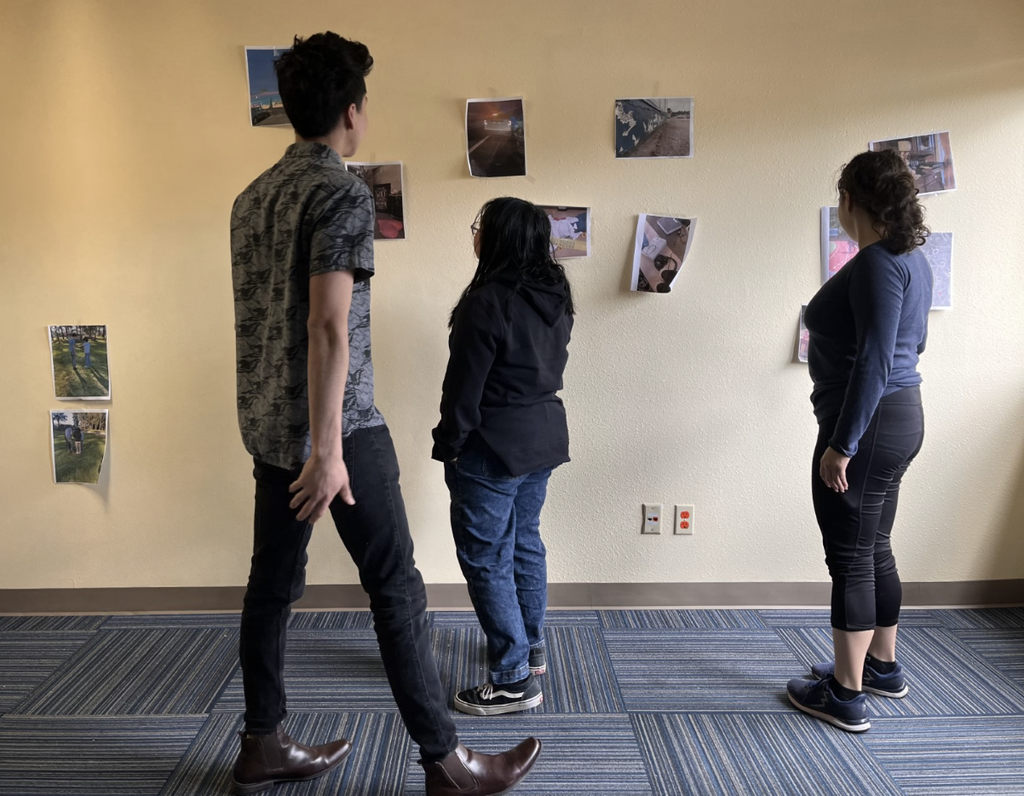
Participants looking at photographs as they discuss themes – Olympia, WA, USA
Beginning in 2024, Mi Chiantla partnered with PhotovoiceWorldwide to collaborate on a research project. Many of the children and teenagers that Mi Chiantla had worked with in the past were still adjusting to a new lifestyle, language, culture, and way of life. Some students had been in Washington barely a month, while others had been raised in the state from infancy. It wasn’t uncommon for a facilitator to switch between English, Spanish, and Spanglish during classes. Presentations and printed material presented another set of challenges. Despite the often-clumsy attempts to get through each step in the method, the youth never lost sight of what they wanted to convey through their photographs.
OUR FIRST PROJECT
Our pilot project was introduced in 2024, with most of the sessions conducted over Zoom. Though not rare for a photovoice project to be built over a digital platform, there were the added challenges of time scheduling (typical for students), language barriers, and technology accessibility. A few students had trouble understanding the material instructions. Others had limited access to a phone, laptop, or internet connection that would allow them to attend sessions. And some simply could not find enough time in their schedule to participate fully. Furthermore, there were no cameras available at the time that this project took place, meaning that participants had to use or borrow a phone. These challenges asked an important question. What are the skills that a facilitator needs to make sure that research participants can build a strong project even with limited resources? The answer soon became clear. One strong trait of photovoice is that it is participant driven. Not only does this mean that the participant gets to choose what to document and what to convey in their research, they drive the process of their learning as well. A facilitator’s job is to guide them during that process, and to adapt each session in a way to make sure that their participation can be enhanced.
One example of this is encouraging your research group to work together more as a team. If one participant cannot access a phone, the group can plan a way to meet to take photographs together. As Erica noted, “It was inspiring to see three young boys getting organized to meet for a photo expedition and later hear their stories as they described how important they had been for one another’s process. They shared how they staged pictures, how they got their ideas flowing, and how they had turned to candid photos at the end of the day. We could see photovoice had not only become a good exercise to reflect on substance and alcohol prevention, it had allowed new relationship to flourish while providing a new way of spending time together and relate to one another.” Another way team members can work as a team is by helping translate the material or even update team members on the classes they may have missed. Adaptability is one trait that a facilitator would need. Flexibility, an open mind, and strong communication are also necessary. These are what made our pilot project successful despite the obstacles.
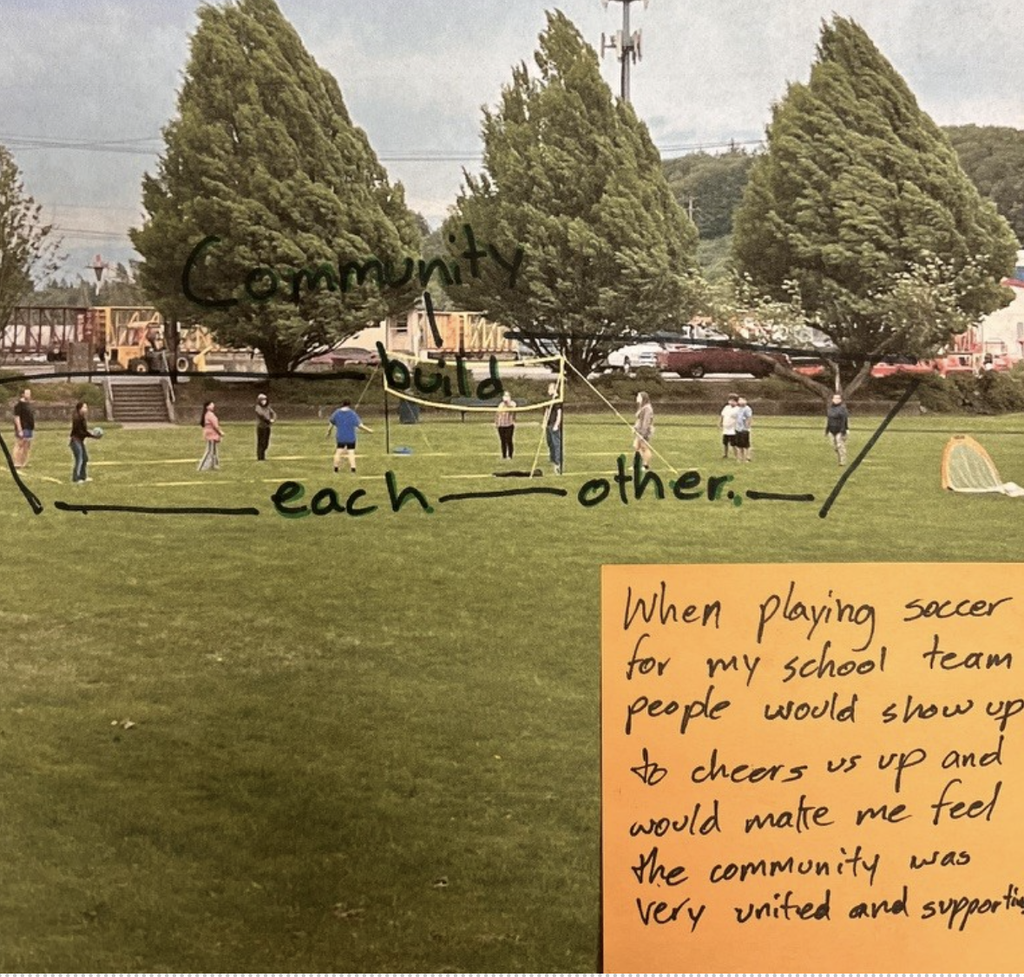
Photo from S. participant to Michiantla’s photovoice project.
Our facilitator from PVWW, Erica Belli, demonstrated a patient, thorough, and resilient way of instruction that made sure each participant’s needs were met. “Proposing a series of arts-based activities proved to be a good way to engage youth beyond the tasks of taking pictures and writing captions,” Erica said. “The results were unique: beautiful collages and creative photo-texts that were later used to work on participatory themating analysis during an in-person meeting at the end of the project journey.” These facilitation skills can be the difference between making a participant feel empowered in their work as opposed to stifled. A missed session does not mean a participant is not interested. Limited technology does not mean powerful documentation cannot occur. A slower pace does not mean the project will fail. Perfecting each step does not make a photovoice project successful. Once research participants feel like they are overseeing their own project and are passionate about what they want to build, that is what makes an enriching experience for all involved.
POLICY CHANGE IN THE MAKING
In 2025, the data from the participants in our pilot project would be presented at a substance-use conference. Our researchers were asked to build and document an investigation around vaping and e-cigarette use in their generation. All the photos had been taken with cell phones, with some participants having to team up to have access to a phone camera. The captions were available in both English and the original Spanish, and each provided strong insight into how our researchers observed substance use in their community. Each photograph revealed how our participants understood the impact of addiction on their peers. Some of the data alluded to how accessible and normalized nicotine use is in real life and the media. The fact that many of our participants had just migrated from their home country provided an even more important insight. They have that ability to compare their environments, especially with the attitudes and behaviors of their peers at schools. This results in data that is culturally enriching as well, as participants share viewpoints that they have grown up with surrounding addiction and substance use.
The data was presented in front of community organizations and advocates that are at the frontline of changing laws surrounding vaping and e-cigarette use in the South Puget Sound area of Washington State. Outcomes like these aren’t achieved through sheer luck or perfect methodology. Accessibility is the true anchor to what makes photovoice projects meaningful. Providing a camera is just one step. Making a space that is adaptable, flexible, and gives autonomy to the participants is central to building a powerful project. Rocky steps are only the result of working within an authentic environment.
Natalia Mejia served as the Program Coordinator at Mi Chiantla for more than three years.