
By Stephanie J. Lloyd and Erica Belli
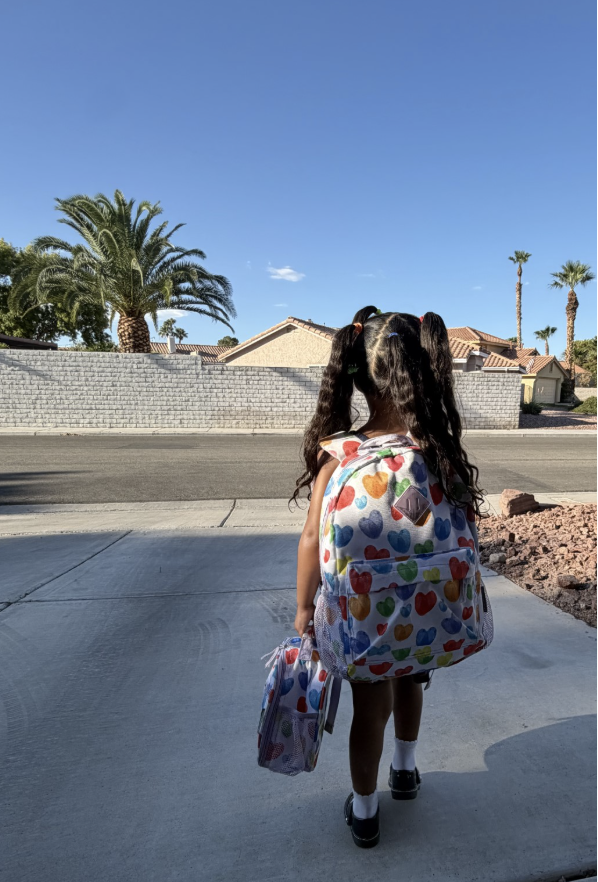
After all the summer fun, it’s time for students (big and little) to head back to school and for everyone to return to a regular routine. With new classrooms and classmates, back-to-school “season” can be a time for students to look closely at the world around them and set intentions for the year. This presents an ideal opportunity to bring some of the best photovoice elements into many different subjects or a viable option for classroom assignments.
What do you notice in this classroom?
What matters to you most at school?
What do you wish students/the principal understood?
What would you like to change about school?
Asking students to talk about their answers through photographs can provide more information than typical beginning of the school year surveys or assessments.
Whether you are conducting a full photovoice project or incorporating some individual photovoice-inspired activities, this approach gives students opportunities to notice their surroundings, document and write about what they see and care about, reflect and discuss with their peers on what’s most important, and share their ideas outside of the group. Even a single activity can draw on these elements. For example, inviting students to photograph something that represents a topic they are learning about, write a caption explaining why they chose it, and share their image in a small group discussion can all be meaningful ways to engage students in a different kind of research or assignment related to the classroom material.
Depending on the activity and goals, students might simply share their photos with a few classmates, or their work might culminate in a full class hallway gallery, family night, digital exhibit, presentation to school administrators, community event, or recommendations developed by students.
“Photovoice appeals to our visual culture and is accessible for children. … it gives children literally control, because they handle the camera and take the pictures. Children become active agents in exploring their own experiences and perception of the world (Cook and Hess Citation2007).”
There are many inspiring examples of how photovoice can be adapted across ages and subjects. For example, photovoice has helped students explore and learn about well-being, environmental issues, mental health, examples of math in everyday life, and much more. Because the method is highly adaptable, a project could be a semester-long (with many shorter sessions) or could include four short sessions completed within a month.
This 3-part series will share suggestions and examples for each level: elementary, middle and high school, and college.
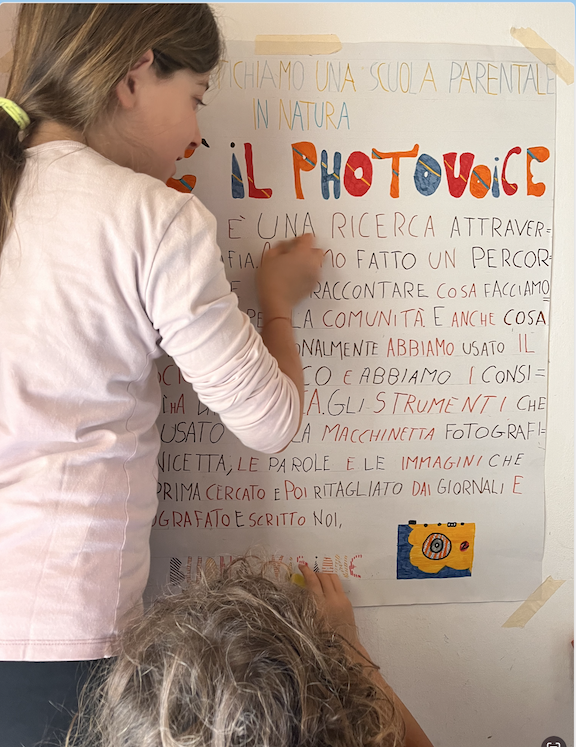
Photo by E. Belli
Of course, ethics and safety first!
As always with photovoice projects, participant and community safety are key. Working with young people requires intentional planning around ethics, privacy, access, and choice. A few things to keep in mind before asking students to pick up a camera:
- Establish clear guidelines about when and where photographs may be taken, particularly regarding people’s faces.
- Plan for equitable access. Don’t assume every student has a smartphone or an easy way to share photos. Provide school devices, shared cameras, or classroom photo-taking time when possible, and make sure students have comparable access to equipment.
- No camera? No problem. Students can draw the image they would take, photograph objects with a shared device, choose from provided images, create a collage, or describe the photo they wish they could capture.
- Ongoing consent is key! Obtain permission to participate ahead of time and permission to publicly share a photograph or story (or the ability to decline at any point) when it’s time for sharing outside of the group.
- Hand over the control. Participation means more than being invited to speak: recent youth participatory research shows that power continues to be negotiated throughout a participatory process, even when young people are given opportunities to contribute (Davis-Rae & Wood, 2026). In a classroom, this means thinking beyond simply asking students for their perspectives and instead handing over control—letting students decide which questions are asked, which photographs are discussed, what topics matter most, how their messages are presented, what is shared outside the group, and what happens next. How carefully each of these steps is facilitated will depend on the ages of the students.
- Offer alternatives such as drawing, photographing objects rather than people, selecting existing images, or describing an image they wish they could take.
Elementary School Children
Photovoice gives teachers a chance to work on visual literacy even before cameras are in the picture. In the hyper-visual world we live in, these are skills that will serve students far beyond the classroom. Learning to look closely, spending time (more than a split second!) with images, considering what the message of an image could be, how it makes us feel, can help students become more thoughtful and critical viewers of the world around them.
For example:
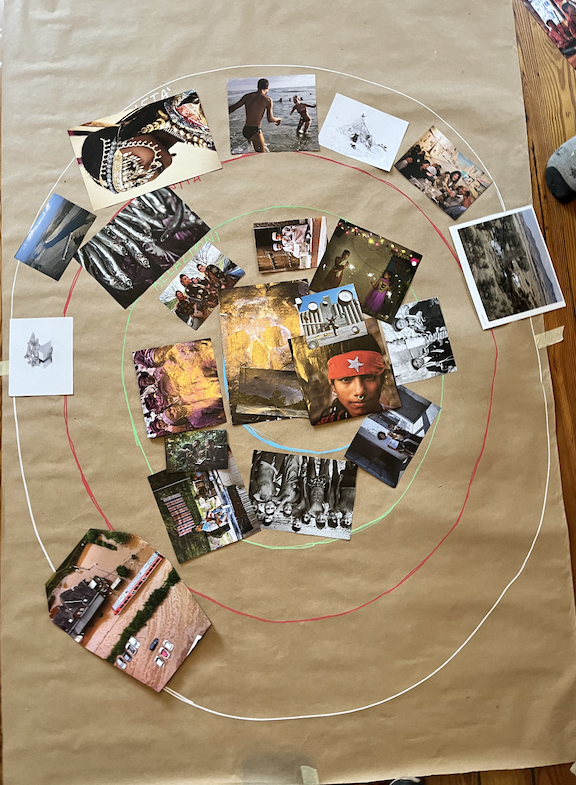
You can start introducing photovoice skills with simple activities that do not require students to take photographs themselves. In a semester-long project developed with kids age 8-11 in Italy, I (Erica) used National Geographic photos to explore how photography can present a subjective truth and to introduce the role of captioning.
I asked children to choose a photo from a pile and imagine and draw what they thought was happening just outside the frame. This simple activity sparked a much bigger conversation: what can we really know from a photograph? What has the photographer chosen to show us and what has been left outside the frame? We soon discovered that, while an image can tell us a lot, we only see the part of the story that the photographer has chosen to share. Without a caption or other context we might not have the whole story.
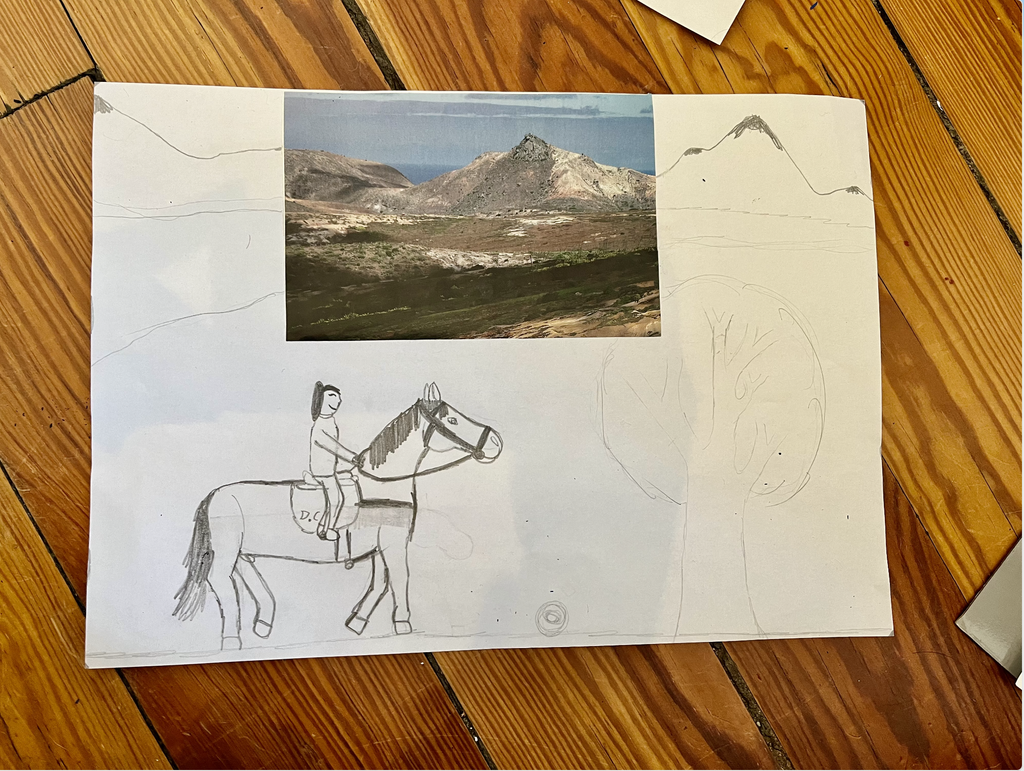
Activities like this can help students begin to think critically about images, while supporting them in reflecting on their own perspectives and how to share them. Consider ways in which you can bring photography skills into your classroom, while keeping it concrete and playful.
Teachers (or parents) may need to help take photographs or support with writing the explanation. Plan to share with families about your plan to use photovoice and provide examples, so they can better grasp what will be asked and be of support. Upper elementary (or older students) may be able to move from noticing and questioning, to crafting research questions as a group and considering what’s most meaningful.
The children I have worked with have enjoyed talking about their life at school and outside of it, especially marking the importance of friendships. I believe it is essential that we leave room for the group to identify what is something that they have at heart and would be passionate about photographing, so that photovoice can become more than one more activity and be a meaningful introduction to self-expression and storytelling.
One example of this approach was visible as I was working with a group of children, sharing their life inside an alternative school to the broader community. One common theme that kept emerging for them was food and friendship – What it meant for them to share a meal and to create occasions for small gatherings, whether they were over school lunches or at after-school events. I would have never thought of proposing this topic, and I was very surprised by how passionate they were about it!
—> IDEA: Try prompts such as:
- “My Happy Place at School”: Students work with the teacher to photograph a place, object, or activity that makes them feel happy, comfortable, curious, or safe.
- “Signs of the Season”: During a science walk, students photograph things that indicate that the season is changing (e.g., leaves, shadows, clouds, insects, plants, clothing, or playground conditions).
- “Our Classroom Through Our Eyes”: What is something that helps you learn every day? What makes the classroom fun? What’s something about the classroom that you would change?
Photovoice Resources and Examples for Elementary School Teachers
Here are a few resources that can spark some ideas on how to bring photovoice to your own classroom:
- Abma, T. A., & Schrijver, J. (2020). ‘Are we famous or something?’ Participatory Health Research with children using photovoice. Educational Action Research, 28(3), 405–426. https://doi.org/10.1080/09650792.2019.1627229
- Rivas-Quarneti, N., Viana-Moldes, I., Veiga-Seijo, S., Canabal-López, M., & Magalhaes, L. (2024). “Politicizing Children’s Play: A Community Photovoice Process to Transform a School Playground.” American Journal of Occupational Therapy, 78(4). https://journals.sagepub.com/doi/full/10.5014/ajot.2024.050435
- Léger-Goodes, T., Herba, C. M., Piché, J., Smith, J., Éthier, M.-A., Lefrançois, D., & Malboeuf-Hurtubise, C. (2025). “I want to talk about climate change, but I wish I didn’t have to…” BMC Psychology, 13, 1339. https://link.springer.com/article/10.1186/s40359-025-03589-w
- Butschi, C., & Hedderich, I. (2021). How to involve young children in a Photovoice project: Experiences and results. Forum Qualitative Sozialforschung / Forum: Qualitative Social Research, 22(1). https://www.qualitative-research.net/index.php/fqs/article/view/3457
What’s next?
- Remember, it is important not to ask students for their voices unless adults are prepared to listen. If students identify barriers, inequities, concerns, or ideas for improvement, build in a meaningful way for those perspectives to reach someone who can respond.
- Are you interested in planning a photovoice project or activity with youth and don’t know where to start? Register for one of our trainings or email: info@pvww.org to set up a tailored training or project support for you and your team members.
- Stay tuned for part 2 of this blog series which is geared towards engaging middle and high school students.