We got so much more out of this project than just sharing our stories. — North Country Photovoice Participant-Researcher
On May 1, 2025, something extraordinary happened in a conference room at the Maternal Health Summit hosted by the New Hampshire Perinatal Quality Collaborative (NHPQC). Alongside evidence-based panels and clinical presentations, a visual story unfolded on the walls—a story told not by researchers or policymakers, but by mothers from all walks of life in New Hampshire’s beautifully rural North Country.
The North Country Photovoice Project Exhibit debuted that day, offering a deeply vulnerable lens into maternal health experiences in one of New England’s most rural regions and New Hampshire’s poorest county: Coos. It was powerful. People didn’t just look—they paused, leaned in, and felt the stories. This wasn’t just an art installation. It was the result of months of intentional engagement, conversations, and community-based participatory research with people who, too often, go unheard.
Through cameras and conversations, our participant-researchers—all of them mothers navigating pregnancy, birth, and postpartum—documented their lived realities and reflections. Some focused on moments of transformation, others on obstacles in accessing care or support. Each photo was paired with a narrative that gave voice to the mother’s experience.
“Photovoice equips people with tools to document their truths and invites systems to listen differently.”
This project started with a question and an invitation. With support from The Dartmouth Institute’s Health Equity Faculty Fellowship, Dr. Sanam Roder-DeWan, an Associate Professor of Community and Family Medicine at Dartmouth, reached out to explore a growing crisis in maternal health: What happens to communities when they lose their local labor and delivery units? Specifically,
Describe the experience of people and providers impacted by poor access to maternity care in New Hampshire
Co-create strategies to mitigate the impact of maternity care access challenges for people in the state
Sanam wanted to understand this gap in the literature—but more than that, she wanted to understand it through the voices of the people living it. From the very beginning, she honored the need for community leadership and trusted WOMB (Women of the Mountains Birth Initiative) to help guide that process.
Working with Sanam has been one of the most meaningful parts of this journey. She brought not only deep expertise in global maternal health but a rare humility and respect for lived experience. Together, we designed this project to center rural mothers as participant-researchers, not just subjects of study.
The project was reviewed and approved by Dartmouth’s Institutional Review Board (IRB), ensuring that each step prioritized the safety, autonomy, and dignity of those involved. It’s been a beautiful and collaborative effort—one rooted in shared values of equity, listening, and transformation.
“Stories and the creative ways you can tell them have the potential to change systems.”
I’ve come to believe that stories and the creative ways you can tell them have the potential to change systems. In rural regions like the North Country—where access to perinatal care is fragmented, stigma can silence, and isolation is real—those most impacted by these challenges often aren’t at the policy table. Photovoice changes that. It equips people with tools to document their truths and invites systems to listen differently.
We didn’t set out to “study” anyone. We set out to build trust. Mothers were invited as participant-researchers. We asked each mother to use her creativity and newly learned photography skills to:
Represent your experience of being pregnant or giving birth
Illustrate a challenge you experienced in accessing maternity care in the North Country
Illustrate the feeling of being supported as a pregnant or birthing person in the North Country
Each cohort used the second photovoice session to thematically analyze the initial round of photos to develop a second set of prompts that asked:
Berlin/Gorham Cohort:
Represent your experience of being unheard during your motherhood journey
Illustrate the balance needed between quality and access
Illustrate the feeling of having to self-advocate for your preferred maternity care as a pregnant or birthing person
Littleton Cohort:
Represent how your relationship with your providers makes you feel
Illustrate how this feeling impacted your birth/motherhood journey
Illustrate the mismatch of needs vs. services available
Colebrook/Virtual Cohort:
Illustrate the sacrifice(s)/compromise(s) or creative problem-solving necessary to safely bring life into the world.
Illustrate the additional cost of accessing maternity care (monetary, time, planning, resources, etc.)
Represent using your voice/exercising your autonomy while getting the services you wanted/needed.
Represent the feeling of transitioning from maiden to mother/maturing into motherhood
“We didn’t set out to ‘study’ anyone. We set out to build trust.”
Prior to the final exhibit participant-researchers from all three cohorts (Berlin/Gorham, Littleton, Colebrook/Virtual) came together at the WOMB (Women of the Mountains Birth) Initiative’s office space for more thematic analysis work to finalize the themes each photo fit into. The five key themes highlighted in our exhibit share that participant-researchers:
Make compromises and find creative solutions while making decisions about maternity care by balancing quality and access,
Experience a mismatch between needs/preferences and services available,
Feel unheard and actively advocate for their preferred maternity care,
Experience isolation, especially in the postpartum period and during pregnancy loss, and;
Thriving in motherhood and building resilience even in the face of challenges
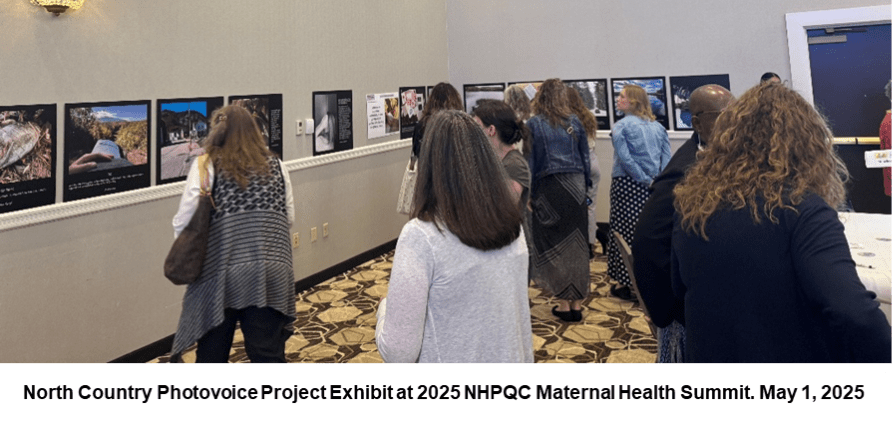
The exhibit featured over 40 images made by mothers from all walks of life, stretching across a long wall in the summit venue.
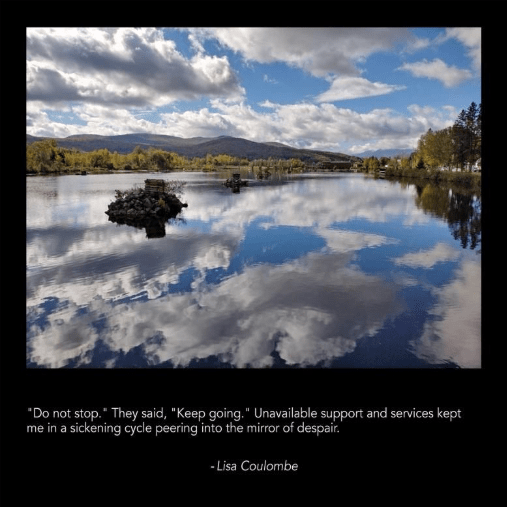
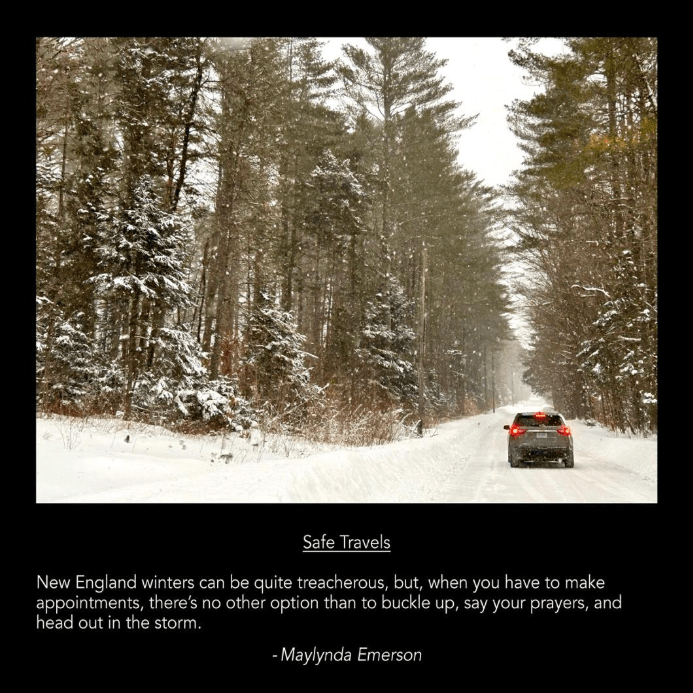
In this photo—a stunning mirror image of the vibrant blue sky reflecting into the tranquil Androscoggin River—a mother communicates the lack of support/treatment options for patients with substance use disorder living in the north country. Her caption reads, “‘Do not stop.’ They said, ‘Keep going.’” Unavailable support and services kept me in a sickening cycle peering into the mirror of despair.” This photo shows an SUV braking while driving down a back road lined with snow-covered trees—symbolizing the long (sometimes treacherous) journeys North Country mothers often travel to reach care.
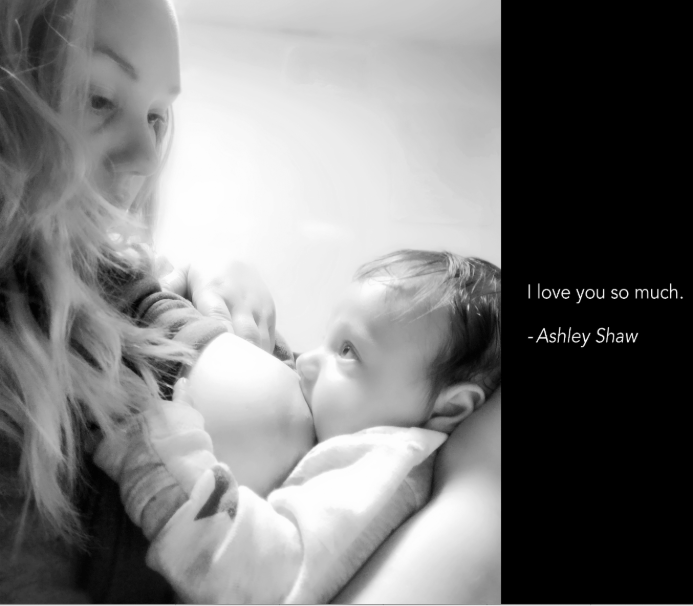
A third image, raw and real, shows a mother breastfeeding with the words: “I love you so much.” The words that helped this mother persevere through her challenging breastfeeding experience.
These images sparked conversation. Healthcare providers, public health leaders, and community advocates lingered in front of each one, reflecting not just on what was seen—but what was being said.
One summit team member shared, “I’ve heard nothing but positive reflections about the exhibit and the powerful and courageous women who were there to share their stories!”
“Change begins with listening.”
The North Country Photovoice Project is rooted in collaboration. It was born from the belief that rural health equity cannot be achieved without rural voices at the center. With generous support from The Dartmouth Institute and the North Country Maternity Network (NCMN) through HRSA’s Rural Maternity and Obstetrics Management Strategies (RMOMS) program, we were able to fund and recruit a diverse group of participant-researchers across the region.
We worked alongside doulas, community health workers, chiropractors, lactation consultants, and new mothers—not only to create this exhibit but to begin shifting the way systems think about engagement, trust, and respect in maternal healthcare. These partnerships made it possible to elevate stories that might otherwise remain unheard and to ensure that the process was grounded in both trust and shared leadership.
There’s still so much work to do. Structural barriers like transportation, workforce shortages, and systemic bias continue to affect birth outcomes and family wellbeing across northern New Hampshire. But change begins with listening. And that’s what this project invites us all to do.
What’s Next?
Our team is working to bring the exhibit to libraries, community colleges, and hospitals throughout the region/state over the next several months. We’re also compiling a digital version for broader access and working with our participant-researchers to co-create strategies to mitigate the impact of maternity care access challenges for people in the state. Our next exhibit is scheduled for September 19, 2025, to coincide with WOMB’s community screening of the documentary “Birth Time” and a “Building your Village” panel discussion highlighting local and statewide resources for women and families throughout the region. Birth Time Documentary Screening, Dinner, & Panel Discussion | WOMB Initiative
Photovoice has sparked more than reflection—it has catalyzed new partnerships and ideas. From perinatal quality improvement to doula workforce development, the stories collected here will inform next steps in how we build a truly responsive, community-driven maternal health system.
Image: Attendees at the NHPQC Maternal Health Summit view the North Country Photovoice Project Exhibit. Each photograph was paired with a personal narrative capturing a unique experience of pregnancy, birth, or postpartum in northern New Hampshire.
About the Author
Kailene Jones is a natural birth enthusiast, maternal health advocate, public health professional, community-based researcher, aspiring birth doula, and mother of three birth center/home birthed babies based in northern New Hampshire. She holds a master’s in public health from University of New England and enjoys leading grassroots initiatives that uplift rural voices through storytelling, community collaboration, and participatory action research. As a lifelong resident of Coos County, Kailene has almost eight years of public health practice experience, including five years as a Project Manager & Specialist for two essential maternal health improvement projects in Dartmouth Health’s Population Health Department. Kailene currently sits on the North Country Maternity Network’s Advisory Board as a Patient Advocate, is a member of the NH Maternal Health Taskforce and NH Breastfeeding Taskforce and is a founding board member/current grants committee chair of the Women of the Mountains Birth Initiative (WOMB). She is passionate about making a difference in the lives of others and honored to serve as NH Perinatal Quality Collaborative’s Photovoice Community Engagement Manager to launch more photovoice projects to share stories of more people impacted by this global maternal health crisis throughout New England.