
By Christian Caicedo Carbonell
This post compares two Photovoice processes I facilitated – one before and one after taking the Photovoice Worldwide Facilitator Training – while also reflecting on my personal journey with photography and Photovoice.
Before the Frame: Discovering Photovoice
I used to think photography was something elegant—an art for those who could afford expensive cameras and lenses, for the lucky few who could make a living doing something I had always loved: art. To me, photography seemed like a privilege. I am a lawyer by training, which made it even harder to pursue my passion for visual storytelling. But my path led me into the field of Human Rights and Democracy, where I discovered my real calling—working with people, communities, and culture. That work opened a completely new world to me: art as participation, art as a democratic expression, and art to make visible those who have been historically invisible.
Among the many community-based artistic initiatives I encountered street theatre, community radio, local sports collectives – I came across Photovoice. It instantly resonated with me because it merged two things I deeply care about: community work and photography. And what struck me most was how Photovoice democratizes art, making it accessible to anyone, regardless of their technical skills or resources.
The First Photovoice: Before the Training
In 2024, while pursuing my Master of Arts in Global Leadership at Royal Roads University, I found my studies deeply connected to my Photovoice journey. My Capstone Project, “Portraits of Fernwood: Exploring Photovoice as a Participatory Evaluation Tool,” builds upon the work I began at Fernwood Neighborhood House, a small community organization in Victoria, B.C. Through this project, I explored how arts-based and participatory methods like Photovoice can serve not only as tools for storytelling and inclusion but also for program evaluation and community learning.
Part of my role at FNH was to design a community engagement project that would help gather feedback about the organization’s programs—especially one called Community Dinner, a space where residents could share a low-cost meal and connect with their neighbors every Monday evening.
When our team brainstormed ideas, one of my colleagues mentioned Photovoice. I immediately remembered my earlier experiences with it in South America, where we had used it to engage Indigenous Peoples and refugees. I was inspired again.
So, without much expertise but a lot of intuition, we began exploring Photovoice through online resources—and that’s how I first came across PhotovoiceWorldwide. Their stories and examples gave me the courage to start a small pilot we called Fernwood Photovoice.
I focused mainly on collecting visual feedback from participants. We had:
- A basic consent form
- Two guiding questions (“What does the Community Dinner mean to you?” and “What does the Community Centre mean to you?”)
- And three instant cameras we used for participants to take photos and write short, handwritten reflections
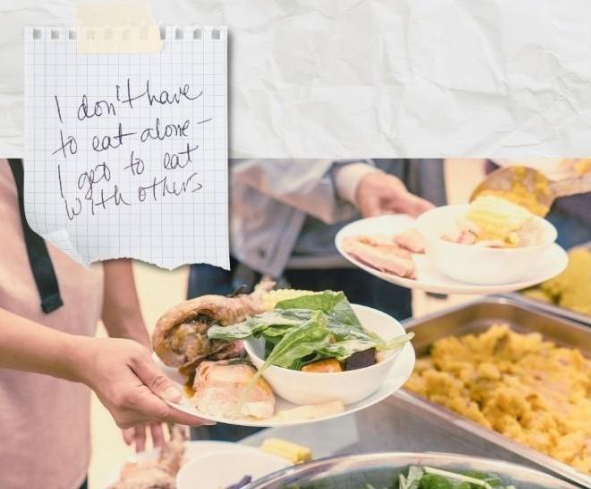
The results were valuable but somewhat limited. Most participants answered the questions directly, in short, simple phrases of one or two lines. While this made it easier to extract key themes for program evaluation, it also felt like we were missing something deeper.
Over eight months, more than 130 participants took part in the Fernwood Photovoice Project. We hosted storytelling workshops, formed a small community photo committee, and invited them to select the photos for our final exhibit. The key themes that emerged were neighbor support, food as connection, and the need for safe spaces for families and children.
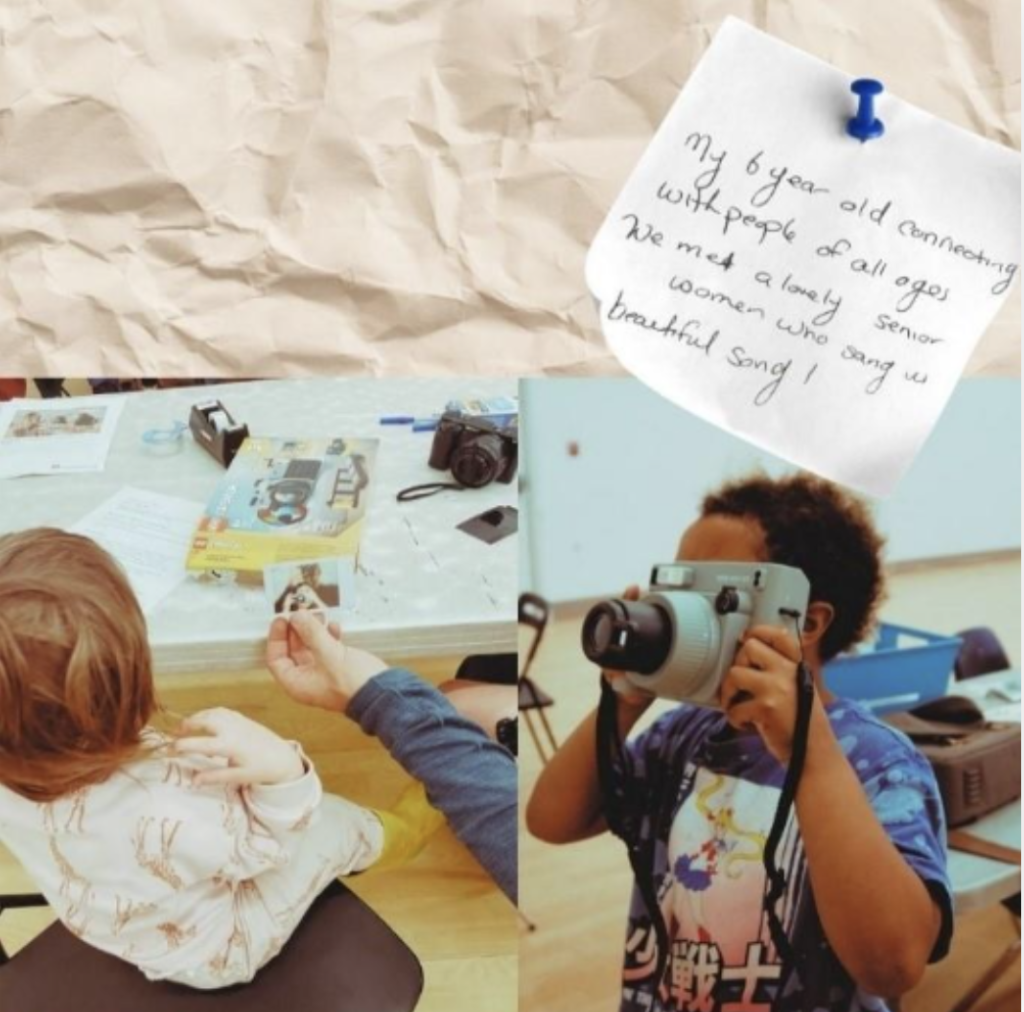
Photo 2. Community Dinner, January 2025 – “My six-year-old connecting with people of all ages.”
After the Frame: Learning to Facilitate
By 2025, I was entering the final stage of my master’s degree in Gl and preparing to write my Capstone Project. I wanted to build on my earlier work with Fernwood Photovoice, but this time, I aimed to use Photovoice not just as a participatory method, but as an evaluation tool for community programs.
To go deeper, I returned to PhotovoiceWorldwide, seeking a more structured approach to facilitation. That summer, I joined their Intensive Facilitator Training, along with ten other participants from around the world. Guided by Laura Lorenz and Erica Belli, we explored Photovoice theory, ethics, and facilitation practice —including the SHOWeD method:
- What do you See here?
- What’s really Happening?
- How does this relate to Our lives?
- Why does this situation exist?
- How can this image Educate others?
- What can we Do about it?
This time, I worked with Best Babies, a local program supporting newcomer, immigrant, and refugee families with infants. The training helped me bring much more structure and depth to the process.
Using SHOWeD as a guide, the conversations became more meaningful. Instead of short, surface-level comments, participants began to share stories – rich, emotional reflections on their lives, families, and experiences.
When asked how Best Babies contributed to their family life, participants not only reflected deeply, but also, proposed writing their feedback in their own language. They explained that while photography helped bridge language barriers, the ability to express themselves in their native tongue was equally empowering.

That moment made me realize the real power of SHOWeD. It’s not just about what is visible in an image – it’s about what is said, written, and felt. Writing in their own language became both an act of empowerment and a form of resistance to colonial systems that shape how we communicate and interpret the world.
As Dr. Laura Lorenz emphasized during the training, the facilitator’s role is not only to create a safe space, but also to stay curious – to listen, ask, and be guided by the participants.
The act of questioning allows unexpected themes to surface, sometimes more revealing than the images themselves.
– Christian Caicedo Carbonell
Reflections: What Changed
My role as a facilitator before and after the Photovoice Worldwide training was profoundly different. Both projects were meaningful, but the latter had more depth, structure, and reflection. Having access to real examples from experienced facilitators helped me design spaces that were more intentional, yet still participant led.
The training helped me understand that
Facilitating Photovoice is not about controlling the process — it’s about going on a journey with participants, guiding them while also allowing myself to be guided by them.
– Christian Caicedo Carbonell
Because in the end, that’s what Photovoice is about: collective exploration, shared ownership, and transformation through dialogue.
It’s not about expensive cameras or technical perfection. It’s about art as participation, art as democracy—a way to restore voice and visibility to those who have been excluded from galleries or systems that define what “art” should be.
It’s about the beauty of imperfection, the humanity in every frame, and the power of community to bridge barriers that institutions could never do alone.
About the author:
Christian Caicedo Carbonell is a Human Rights and Democracy lawyer whose work in community development across South America and, more recently, in Canada, has led him to explore arts-based methods such as photovoice. Through this approach, he sees photography as a democratic and participatory tool—one that amplifies community voices, fosters collective learning, and uses art as a medium for social change. Christian recently completed a Master of Arts in Global Leadership at Royal Roads University, where his Capstone Project, “Portraits of Fernwood: Exploring Photovoice as a Participatory Evaluation Tool,” explored how arts-based methods can connect community expression with participatory evaluation and social transformation.

Learn more about PVWW trainings and courses here
Learn more about PVWW events here