
by Laura Lorenz
When people hear the word photovoice, they often think about taking pictures. But photovoice has always been about much more than photography. At its heart, it is a community process that helps people share their own stories, reflect on what matters most, and work together to create positive change.
The basic process is simple but powerful. Participants (called co-researchers) take photographs that represent their everyday experiences, share and discuss those images with others, reflect on what they reveal about their community, and then bring those stories to decision-makers who can help address the issues they identify (Wang & Burris, 1997). Rather than having researchers or professionals define community needs, photovoice recognizes that the people living those experiences are the true experts.
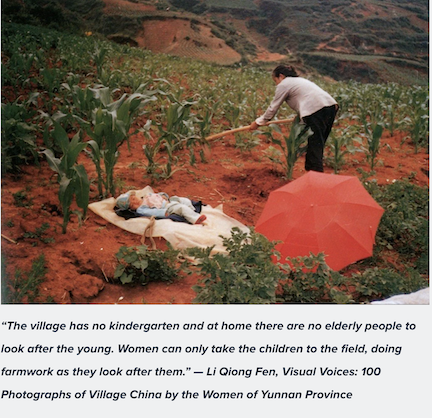
Where Did Photovoice Begin?
Photovoice was developed in the early 1990s by Dr. Caroline Wang and Dr. Mary Ann Burris. Their first project took place in rural Yunnan Province, China, as part of the Ford Foundation-supported Yunnan Women’s Reproductive Health and Development Program (Wang & Burris, 1994, 1997).
In that project, 62 village women volunteered to document their daily lives through photographs. Their images highlighted issues such as women’s health, access to childcare, girls’ education, sanitation, and economic opportunities.
They learned how to use point-and-shoot cameras and took photos of their work, children, and customs. Their images highlighted issues such as women’s health, access to childcare, girls’ education, sanitation, and economic opportunities. They shared stories about their photos with each other, in photo-interviews, and with regional policymakers through exhibits and presentations, helping influence programs and decisions that affected the women’s communities (Wang & Burris, 1994).
Photographs can communicate the voices of women who ordinarily would not be heard
(Wang, Burris & Ping, 1996:1396)
and broadcast their voices to decision-makers
Built on Powerful Ideas
Photovoice did not emerge in isolation. Wang and Burris intentionally combined ideas from participatory education, feminist theory, documentary photography, and participatory action research.
One of the strongest influences came from Brazilian educator Paulo Freire. In Pedagogy of the Oppressed, Freire (1970) argued that education should help people critically examine their own experiences and work collectively to transform the conditions affecting their lives. Photovoice reflects this philosophy by placing cameras in the hands of community members rather than outside observers. The discussion of photographs becomes a way for participants to recognize shared experiences, deepen understanding, and build confidence to advocate for change (Wang & Burris, 1994).
Feminist theory also shaped the development of photovoice. Feminist researchers have long argued that those most affected by social issues should have the opportunity to tell their own stories and participate in decisions that affect their lives. Photovoice embraces this principle by reducing the traditional divide between researcher and participant. Instead of researchers interpreting people’s experiences for them, participants create and explain the meaning of their own photographs (Wang & Burris, 1997).
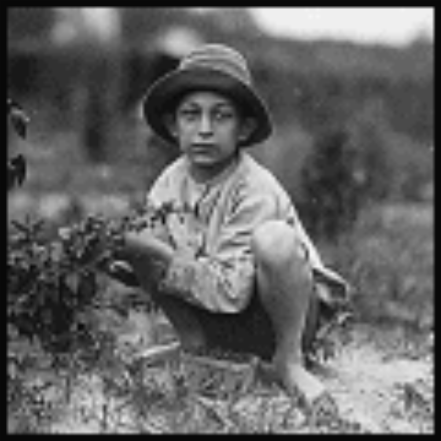
Source: Lewis Hine, photographer. Boy Picking Berries, Near Baltimore, Maryland, June 8, 1909; National Archives and Records Administration, Records of the Department of Commerce and Labor, Children’s Bureau. Record Group 102. National Archives Identifier: 523205. https://www.archives.gov/education/lessons/hine-photos
Documentary photography provides another important foundation. Photographers such as Lewis Hine used images to expose child labor and unsafe working conditions, while Gordon Parks documented poverty, racial inequality, and the Civil Rights Movement. Their work demonstrated how photography could raise public awareness and inspire reform. Photovoice builds on this tradition but takes it one step further: community members become the photographers, storytellers, and advocates for their own communities. They not only take the photos, but also decide which ones are most important to share outside of the group.
Wendy Ewald and Jim Hubbard – participatory photography with youth. A fourth root is the work of photographers who put cameras in the hands of young people. Wendy Ewald worked with Appalachian children to support their reading and writing skills (Ewald and Lightfoot, 2002). Jim Hubbard gave cameras to children experiencing homelessness and taught them to document their daily lives in pictures (Hubbard, 1991). Both photographers worked with young people to interpret photos, build photography and visual literacy skills, create self-portraits, photograph their lives, write captions and stories, and express themselves.
The Future of Photovoice
At its inception, Wang and Burris had three clear goals:
- Enable people to record and reflect on their community’s strengths and concerns.
- Promote critical dialogue through discussion of photographs.
- Reach policymakers and others who can help create meaningful change (Wang & Burris, 1997).
More than three decades later—as photovoice grows across health, education, environmental justice, disability studies, Indigenous research, and community development—these goals continue to guide photovoice projects around the world.
Recent reviews have found that the photovoice method remains especially valuable because it elevates lived experience, encourages collaboration, and creates opportunities for communities to influence policy and practice (Anderson et al., 2023; Burris et al., 2023). Researchers also emphasize that the conversations, relationships, and trust built during the photovoice process are just as important as the final photographs themselves (Burris et al., 2023).
Conclusion
At its best, photovoice combines visual and narrative data to shape policy, programs, and community initiatives in health, education, and beyond—inspiring positive change for individuals, groups, communities, and society. When you plan, facilitate, fund, and participate in photovoice projects, you, too, are contributing to the history of photovoice!
Learn more about what photovoice is, how it works, who can do it, and why it matters. https://www.photovoiceworldwide.com/what-is-photovoice/
Laura Lorenz is Cofounder and Educator at PhotovoiceWorldwide. She has been immersed in the photovoice method, facilitating photovoice projects, and leading photovoice method trainings since 2000. Her popular and peer-reviewed articles, papers, books, and training manuals and toolkits have informed multiple generations of facilitators, researchers, advocates, and clinicians about ways to use the photovoice method in their work.
References
Anderson, K., Elder-Robinson, E., Howard, K., & Garvey, G. (2023). A systematic methods review of photovoice research with Indigenous young people. International Journal of Qualitative Methods, 22. https://doi.org/10.1177/16094069231172076
Burris, M. A., Evans-Agnew, R. A., & Strack, R. W. (2023). Braiding the healing gifts of photovoice for social change: The means are ends in the making. Health Promotion Practice, 24(6), 887–895. https://doi.org/10.1177/15248399231192993
Ewald, W., and Lightfoot, A. (2002). I wanna take me a picture: Teaching photography and writing to children. United States: Beacon Press.
Freire, P. (2014). Pedagogy of hope: Reliving pedagogy of the oppressed (R. Barr, Trans.). Bloomsbury. (Original work published 1992).
Hine, Lewis. (1909). “Boy Picking Berries, Near Baltimore, Maryland, June 8, 1909.” National Archives and Records Administration, Records of the Department of Commerce and Labor, Children’s Bureau. Record Group 102. National Archives Identifier: 523205. https://www.archives.gov/education/lessons/hine-photos
Hubbard, J. (1991). Shooting back: A photographic view of life by homeless children. San Francisco: Chronicle Books.
Wang, C., & Burris, M. A. (1994). Empowerment through photo novella: Portraits of participation. Health Education Quarterly, 21(2), 171–186.
Wang, C., & Burris, M. A. (1997). Photovoice: Concept, methodology, and use for participatory needs assessment. Health Education & Behavior, 24(3), 369–387.